What histidine really is
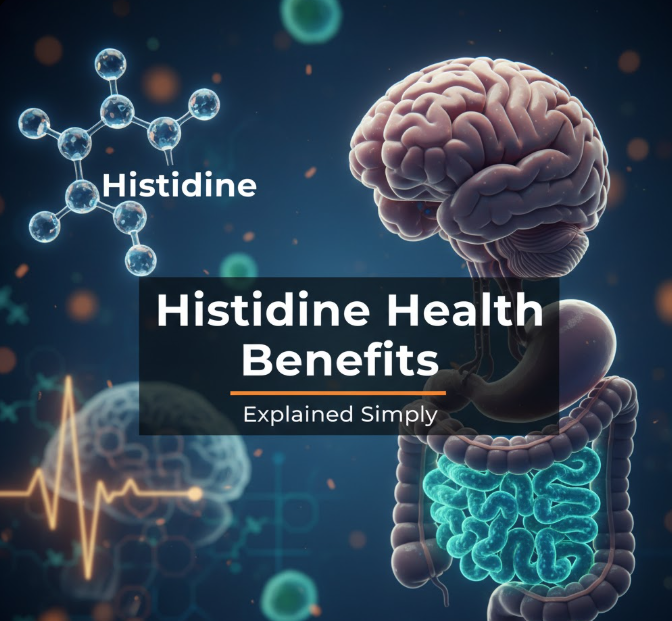
Histidine is one of those nutrients most people have heard about but don’t really understand. In simple words, histidine is an amino acid. Amino acids are the small building blocks that your body uses to make proteins. Proteins then help build muscles, skin, hormones, enzymes, and even parts of your brain 🧠.
Histidine is called a semi-essential amino acid. This means your body can make some of it, but not always enough. Children, growing teens, athletes, sick people, and older adults often need more histidine from food.
Why histidine is special among amino acids
What makes histidine different is its ability to turn into another important compound called histamine. Now, histamine sounds scary because people link it to allergies. But histamine is actually very important. It helps with digestion, immune response, sleep cycles, and brain signals. Without enough histidine, many of these systems slow down or don’t work properly.
Supports brain health and mental focus
Your brain uses histidine to create histamine, which acts as a messenger between brain cells. This helps you stay alert, focused, and mentally sharp. Many people say they feel mentally “foggy” when their diet is poor. Low histidine intake may be one hidden reason behind that foggy feeling.
Histidine also helps protect nerve cells. It supports the coating around nerves, called myelin. This coating helps messages move quickly in the brain and nervous system. When nerves are healthy, thinking feels smoother and reaction time improves.
Helps the immune system stay strong
Your immune system depends on amino acids to make antibodies and immune cells. Histidine plays a role in producing white blood cells that fight infections 🛡️.
It also helps control inflammation. Inflammation is useful when you’re injured or sick, but too much inflammation can damage tissues. Histidine helps keep this balance steady.
Plays a role in digestion and stomach health
Histidine helps your stomach produce gastric acid. This acid breaks down food, especially proteins, so your body can absorb nutrients properly. People with low stomach acid often feel bloated or heavy after meals. Histidine supports smoother digestion.
Also, histamine (made from histidine) tells your stomach when to release acid and when to slow down. It’s like a natural switch that keeps digestion on track.
Supports healthy blood and hemoglobin
Histidine is important for making hemoglobin, the protein in red blood cells that carries oxygen 🚑. Without enough histidine, oxygen delivery can become less efficient. This may lead to tiredness, weakness, or low energy levels.
Some studies suggest histidine may help people with anemia when combined with other nutrients like iron and vitamin B12.
Helps maintain healthy joints and tissues
Histidine supports tissue repair and growth. It helps form connective tissues, including cartilage found in joints. People with joint discomfort or stiffness may benefit from enough histidine in their diet.
It also plays a role in wound healing. When your body repairs cuts, burns, or damaged skin, histidine helps rebuild new tissue.
Balances pH levels in the body
Your body needs to stay slightly alkaline to function well. Histidine acts as a buffer, helping control acid levels in blood and tissues. This balance is important for muscle function, enzyme activity, and overall energy levels ⚖️.
When acid levels go out of control, people may feel fatigue or muscle discomfort. Histidine quietly helps prevent that.
May support heart health
Histidine has antioxidant properties. Antioxidants protect cells from damage caused by free radicals. Free radicals are unstable molecules that can harm blood vessels over time.
Some research suggests histidine may help reduce oxidative stress, which is linked to heart disease. While histidine alone is not a cure, it supports overall heart health as part of a balanced diet ❤️.
Helps manage stress and sleep cycles
Histamine plays a role in regulating sleep and wake cycles. Proper histidine levels help your body know when it’s time to be alert and when it’s time to rest 😴.
Low histidine may be linked with poor sleep quality or irregular sleep patterns. People under stress may also burn through amino acids faster, increasing the need for histidine.
Supports skin health and appearance
Histidine helps protect the skin from UV damage. It supports natural skin repair and may reduce sensitivity. Healthy protein production also helps maintain skin elasticity and smoothness.
Some skincare research shows histidine may help with conditions like eczema when combined with proper medical care.
Histidine and growth in children
For children, histidine is considered essential. Growing bodies need it to build tissues, organs, and muscles. It also supports brain development during early years.
Children who don’t get enough protein-rich foods may not get enough histidine, which can affect growth and immunity.
Food sources rich in histidine
Getting histidine from food is usually easy if your diet is balanced. Here’s a simple table to help 👇
| Food Source | Histidine Content (Approx.) |
|---|---|
| Chicken breast | High |
| Tuna | High |
| Eggs | Moderate |
| Milk & yogurt | Moderate |
| Soybeans | High |
| Lentils | Moderate |
| Peanuts | Moderate |
| Brown rice | Low to moderate |
Animal foods generally provide more histidine, but plant-based eaters can still get enough with variety.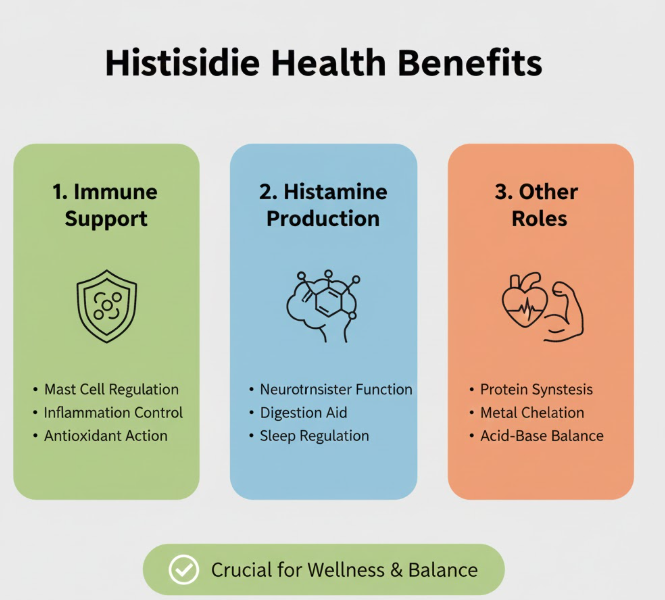
Histidine supplements – are they needed?
Most people don’t need histidine supplements if they eat enough protein. Supplements may be helpful for specific cases like chronic illness, muscle wasting, or medical conditions, but they should only be used after consulting a healthcare professional.
Too much histidine from supplements may increase histamine levels, which can cause headaches, itching, or stomach discomfort in sensitive people.
Signs you might be low in histidine
Histidine deficiency is rare, but possible. Some signs include:
- Constant fatigue
- Poor focus or brain fog
- Weak immunity
- Slow wound healing
- Joint discomfort
These symptoms can also be caused by many other issues, so don’t self-diagnose.
Who may benefit most from histidine-rich foods
Some people may need to pay extra attention to histidine intake:
- Athletes and gym-goers 💪
- Growing children and teenagers
- Older adults
- People recovering from illness
- People with digestive issues
For these groups, balanced protein intake matters a lot.
Simple ways to include histidine daily
You don’t need complicated plans. Small steps work:
- Add eggs to breakfast
- Include lentils or beans in meals
- Eat fish once or twice a week
- Snack on nuts instead of junk food
Consistency matters more than perfection.
Common myths about histidine
Some people think histidine is only about allergies. That’s not true. While histamine is involved in allergies, it also supports many healthy processes.
Another myth is that more is always better. Like all nutrients, balance is key. Too much or too little can cause issues.
Histidine and overall wellness
Histidine may not be as famous as protein powders or vitamins, but it quietly supports many systems in the body. From brain signals to digestion to immunity, it works behind the scenes every day.
When your body has enough histidine, things tend to run more smoothly. You may not notice it directly, but you’ll feel the difference over time 🌱.
FAQs about histidine
Is histidine safe for daily use?
Yes, histidine from natural foods is safe for daily intake. Supplements should be used carefully and only if needed.
Can vegetarians get enough histidine?
Yes. Foods like soy, lentils, peanuts, and whole grains provide histidine. Eating a variety helps.
Does histidine help with allergies?
Histidine turns into histamine, which plays a role in allergies. This does not mean histidine causes allergies. The body regulates histamine carefully.
Is histidine good for muscle building?
Yes. As an amino acid, histidine supports protein formation and muscle repair, especially after exercise.
Can histidine improve energy levels?
Indirectly, yes. By supporting oxygen transport and metabolism, histidine helps maintain steady energy.
Final thoughts
Histidine is a quiet hero in nutrition. It doesn’t get much attention, yet it supports the brain, immune system, digestion, blood health, and more. You don’t need fancy supplements or extreme diets. Just balanced meals, simple choices, and a little awareness go a long way 😊.
When your body gets what it needs, it thanks you in small but meaningful ways.