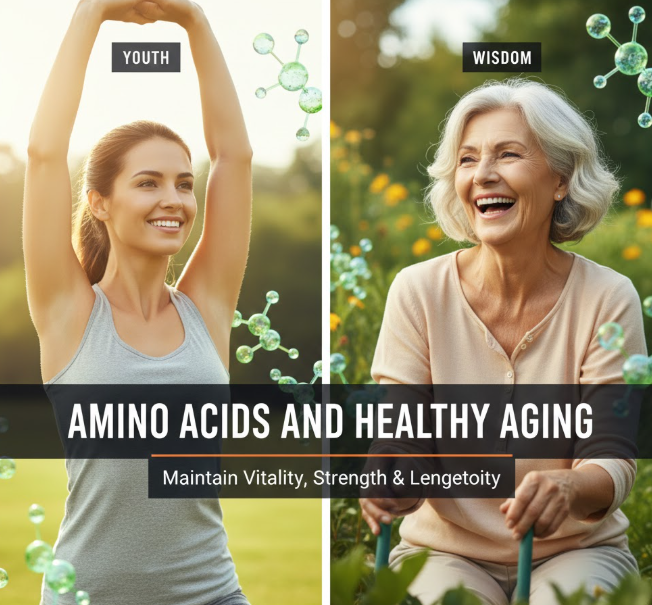
Why Growing Old is Not Growing Weaker
Aging is a normal process of life. Your hair may go gray, you may have to have reading glasses and you may have some wrinkles around your eyes. However, this is one thing that many people do not understand: that you should not find weakness, memory issues, or feeling fatigued all the time as a normal aspect of aging.
The key to being strong and energetic even as you get old may be lurking in the form of amino acids. These tiny molecules are the building blocks of your body and these carry a significant role in ensuring that you are healthy, active or even feeling great regardless of how many candles are on your birthday cake.
Imagine amino acids as the part of a construction crew. They are the ones who are constantly constructing and fixing everything in your body—your muscles, your brain cells. When you get a sufficient number of such workers at work, your body will always remain in good condition. Once you start running short of something, it begins to fall apart even quicker than you can put it back together.
This article will demonstrate to you just how amino acids will help you age well and what you can do to ensure that you are getting the necessary amounts.
What Really Happens with the Amino Acids in Your Body
It is always good to know what amino acids are before we discuss the aging process. It has likely been mentioned that protein is essential to your body. Well, protein is made of amino acids.
Consider protein as a necklace. All the beads of this necklace are amino acids. When you take food that contains protein, your body dismantles that necklace into separate beads. Then it takes those beads and puts them together into new stuff that your body requires.
There are thousands of protein types manufactured in your body that use 20 different amino acids. Your body is capable of making some of these amino acids by itself. These are referred to as non-essential amino acids. Others you must get from food. These are termed as essential amino acids.
The significance of this is that as you grow old, your body becomes less efficient in utilizing amino acids. It is like a construction team that has been the same but has been provided with older, less efficient tools. They are trying their level best but cannot create and repair things as fast as they did.
The 9 Essential Amino Acids that You Require
Nine essential amino acids are required by your body and are not manufactured by your body. These have to be obtained through the food you eat. They all have a special task of keeping you healthy.
Leucine is most likely the most significant to age well. It instructs your muscles to develop and maintain body strength. Imagine that it is the foreman of your building team, and that he is leading all the other workers.
Isoleucine aids in maintaining your blood sugar level and also provides energy. It is also good, particularly for your muscles.
Valine is involved in the repair of muscle tissue in conjunction with leucine and isoleucine in order to keep your energy levels high.
Lysine assists in the absorption of calcium in your body and synthesis of collagen that keeps your skin tight and bones hard.
Methionine performs the functions of a protective covering to your cells and gets your body rid of toxic materials.
Phenylalanine converts into other significant chemicals in your brain that govern your mood and make you think clearly.
Threonine helps the immune system as well as collagen and elastin, which keeps the skin young.
Tryptophan assists in the production of serotonin which makes you feel good and sleep soundly.
Histidine shields your nerve cells and aids in histamine production that is key to your immune system.
The Way Aging Alters Your Body and Its Protein Requirements
When you are young, it is like a new factory with your body in top gear. It is easy to build up muscles, cuts and wounds heal fast, and everything runs smoothly without much effort.
That factory begins to run slowly as you grow old. Your body is no longer efficient in converting protein into muscle. This is referred to by scientists as anabolic resistance. Simply put, it is the fact that your muscles do not react to protein in the same way they did.
This can be easily explained by the following example: a teenager and a 70-year-old person eat the same protein-rich meal. That protein will be efficiently used by the body of the teenager. The body of the older person may be able to utilize only half of it.
This is the reason why the elderly actually require more protein than the younger generation. Approximately 0.8 grams of protein per kilogram of body weight are suggested to be consumed by younger adults. However, studies indicate that the target of adults older than 65 should be 1.0 to 1.2 grams per kilogram.
That amounts to 68 to 82 grams of protein daily for a person having a weight of 150 pounds (approximately 68 kilograms).
The Loss of Muscles is the Most Significant Problem of Aging
Loss of muscle mass is one of the most critical issues that people face with old age. This is a state which is named sarcopenia by scientists. It is not only about being less muscular. The loss of muscle impacts all aspects of your life.
You lose muscle and you become weak. There is increased difficulty in performing simple tasks such as carrying groceries, walking up a stair, and rising out of a chair. The balance is poorer and this makes you more prone to falling. One of the primary causes of severe injuries among the elderly is falls.
Loss of muscles also slows down your metabolism. Even when you are not exercising, muscle tissue consumes more calories as compared to fat tissue. With loss of muscle you burn fewer calories, thus when you gain weight it becomes easy to gain fat.
Now is the place to add amino acids: they are your rescue against muscle loss. Leucine, in particular, that we have mentioned. Research indicates that elderly people who consume sufficient amounts of leucine in meals preserve their muscle mass significantly more than those who do not.
It is not only that you have to eat a sufficient amount of protein, but that you must load each meal with it. Your body can consume a given amount of protein at a time. The intake of 20 to 30 grams of quality protein at a meal appears to be the best option for older adults.
Your Brain Also Needs Amino Acids
The majority believe that they need protein to build their muscles, yet their brain requires amino acids as well. Billions of nerve cells are constantly creating new connections and sending signals to each other in your brain. Amino acids are all needed in this.
There are a number of amino acids that are very essential to the health of the brain as you get older. Tryptophan assists in the production of serotonin that influences the mood and quality of sleep. Depression and sleeping difficulties is an issue that many older adults have difficulties with, and lack of adequate supply of tryptophan can aggravate these problems.
Your body makes tyrosine (obtained via phenylalanine) that assists in the formation of dopamine and norepinephrine. These are chemicals that keep you awake, alert and focused. With a drop in levels, you may also be foggy and forgetful, or simply no longer as sharp as you were before.
It has been found that elderly individuals with sufficient consumption of protein and amino acids perform better in memory assessments as well as being less likely to experience cognitive deterioration. A study of people over 70 years old over many years came up with the finding that individuals who consumed the highest amount of protein were at risk of developing memory issues by 21% less.
The Amino Acids Maintain Your Immune System
Your body has a defense against infections and diseases and it is called your immune system. Your immune system is weakened as you grow old. That is why the elderly have higher chances of becoming ill and are slow to recuperate.
The amino acids are required in the production of the antibodies and the immune cells which help in fighting germs. The amino acid glutamine is of great importance, and your body is capable of producing it out of the rest of the amino acids. It is the primary energizer of the immune cells.
Failure to obtain sufficient protein and amino acids means that your immune system is unable to produce sufficient of these protective cells. Your body is prone to other kinds of infections such as pneumonia, which is a severe condition among the elderly.
Research has revealed that older adults that consume sufficient protein levels exhibit higher immune response to the vaccines and are less susceptible to infections.
The Most Efficient Sources of Amino Acids Are Foods
You have realized the importance of amino acids, and now we can discuss the way to obtain them. Complete proteins are the best sources and they are those that have all nine essential amino acids in sufficient amounts.
Animal foods contain complete proteins. This is milk, poultry, fish, eggs and meat. Approximately 27 grams of protein are found in a 3-ounce chicken breast. One large egg has 6 grams. Approximately 17 grams is a cup of Greek yogurt.
Complete proteins of plant origin consist of quinoa, soy (tofu and tempeh), and buckwheat. But, the majority of the plant proteins are incomplete, i.e. they are low in one or more essential amino acids.
It does not imply that vegetarians and vegans will not be able to obtain sufficient amounts of amino acids. All they have to do is to take different types of plant proteins throughout the day. A whole protein profile can be achieved by combining things such as beans and rice, or hummus and pita bread.
The following table can be useful in providing information about protein and leucine in common foods:
| Food | Serving Size | Protein (grams) | Leucine (grams) |
|---|---|---|---|
| Chicken breast | 3 oz | 27 | 2.2 |
| Salmon | 3 oz | 22 | 1.8 |
| Ground beef | 3 oz | 22 | 1.8 |
| Greek yogurt | 1 cup | 17 | 1.6 |
| Eggs | 2 large | 12 | 1.0 |
| Tofu | 1/2 cup | 10 | 0.8 |
| Lentils | 1 cup cooked | 18 | 1.3 |
| Quinoa | 1 cup cooked | 8 | 0.6 |
For more detailed information about amino acids and their functions, visit aminoacidsguide.com.
Intake of Protein During the Day: When to Eat and When to Fast
Eating protein is almost as important as the amount of protein you eat. The mistake that many of the older adults commit is eating the majority of their protein during dinner. Their breakfast may include toast, lunch may be a small salad, and evening meal may be a big meal with meat.
This is not a good pattern to follow since your body could only be able to digest so much protein at a time. The remainder is used as energy or accumulated as fat rather than building muscles.
The more viable way is to ensure that you distribute your protein evenly in three meals. Intend to consume 25 to 30 grams of protein at breakfast, lunch, and dinner. This keeps your muscles in a building situation during the day.
It is particularly important at breakfast. Research indicates that consumption of protein at breakfast is more effective in maintaining muscle mass compared to the similar consumption of the same protein in the afternoon. To eat in the morning, try eggs, Greek yogurt, cottage cheese or a protein smoothie.
When you exercise, a protein meal within a few hours after the exercise strengthens your muscles and allows them to regenerate. A glass of milk, a handful of nuts or a piece of cheese can serve it.
Amino Acids Are Enhanced by Exercise
It is also essential to obtain sufficient amino acids, yet a combination of good nutrition with exercise results in the creation of strong performance. Exercise, particularly weight training, increases the sensitivity of your muscles to amino acids.
You produce minute tears in muscle fibers when you lift weights or perform other forms of resistance exercises. Amino acids, when used in repairing those tears, then make the muscles stronger and bigger in the process that your body does.
Even mild-form strength training is beneficial. You do not have to go to a gym lifting heavy weights. Resistance bands, light dumbbells or even bodyweight exercises such as squats and push-ups against a wall can help.
It has been established that with proper protein nutrition and resistance training twice a week, older adults are able to retain and even increase muscle mass. In one study the individuals who were in their 70s and adhered to this strategy had an average of 4 pounds of muscle gain in 12 weeks.
Walking is also beneficial. Although it does not build your muscles as strength training does, it aids in maintaining the muscles that are already there and in the utilization of the amino acids in the body.
Red Flags to Not Eating Amino Acids Adequately
What makes you know whether you are getting enough amino acids? Your body gives you clues. Be aware of the following warning signs:
You feel fatigued all the time, and you are not getting more rest. It may be because your body does not receive enough building blocks to generate energy. Recurring infections or taking a long time before you get back on your feet after a cold may be an indication of an immune deficiency because of insufficient protein.
Slow wound healing requires amino acids to heal wounds. In case cuts and bruises require weeks to heal, then you may require additional protein. Other signs include loss of hair, brittle nails and dry or flaky skin since these tissues are composed majorly of protein.
The fact that mood varies such as becoming anxious or depressed may be attributed to the fact that amino acids are not high enough to produce brain chemicals. Experience with muscle building or exercising and still failing to build or sustain muscle indicates that your body is not receiving the amino acids it requires.
Talk to your doctor in case you notice some of these indications. They will be able to verify whether you have deficits and assist you to establish a strategy that will aid you to obtain more amino acids within your diet.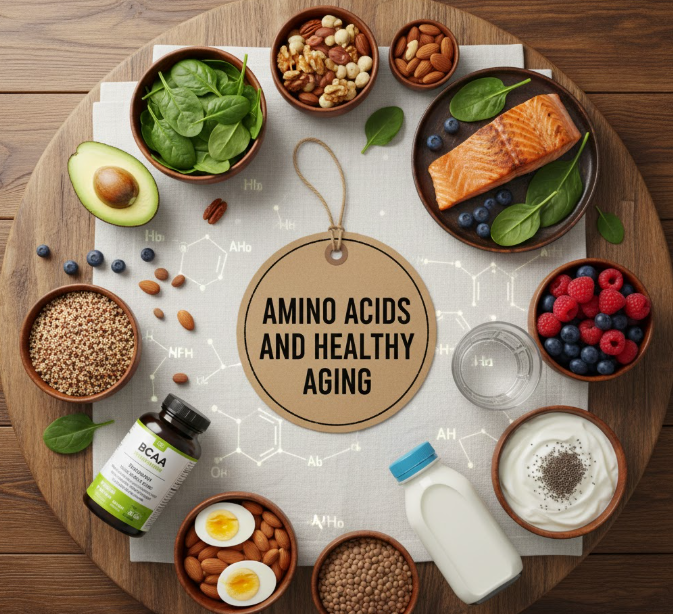
Amino Acid Supplements: Yes or No?
Amino acid supplements, particularly BCAAs (branched-chain amino acids: leucine, isoleucine, and valine) are sold by many companies. Are these worth your money?
To the majority, food is preferable to supplements as a source of amino acids. Whole foods are not only full of amino acids, but they are also full of vitamins, minerals and other essential nutrients needed by your body.
Nevertheless, supplements may be useful in some cases. A protein powder or an amino acid supplement might be used to supplement the lack of protein in your diet in case you have poor appetite, dental issues, or digestive problems.
Specifically, leucine supplements have been seen to be beneficial to older adults in an attempt to retain muscle mass. There has been some research indicating that leucine supplementation to meals might be used to overcome the anabolic resistance which we mentioned earlier.
When taking supplements, use the products that third-party organizations have tested. Look for the seals of NSF International, USP or ConsumerLab. Such bodies ensure that supplements are what they say and do not have dangerous contaminants.
There are no supplements that you should start without first discussing them with your doctor, particularly when you are on medications or have a medical condition such as kidney disease.
Special Needs of Various Health Conditions
There are certain conditions of health that are prevalent among people in old age which influence the way your body utilizes amino acids. These can make you better choices, of course, if you understand them.
Protein and carbohydrate balance are important to you in case you have diabetes. Protein will assist in stabilizing blood sugar, yet excessively high protein diets would overwork your kidneys, provided you have some kidney damage already that is related to diabetes.
Protein should be taken more cautiously by persons with kidney disease. Bad kidneys find it difficult to reduce protein waste products. Your physician may also advise that you should have a protein intake of 0.6 to 0.8 grams per kilogram body weight.
Amino acids such as lysine are helpful to those with osteoporosis because they assist your body to utilize calcium. Your bones are also covered by sufficient protein. People are alarmed that high protein makes bones weaker; research conducted helped to counter this argument.
When you are having heart disease then you should prefer lean sources of protein and fish. Salmon, mackerel, and sardines are also sources of amino acids and fatty acids (Omega-3) to keep your heart healthy. According to the National Institutes of Health, maintaining adequate protein intake while managing chronic conditions is crucial for overall health.
Developing Your Own Amino Acid Action Plan
Ready to use amino acids for aging well? This is a plan to start with.
The first step is to determine the necessary amount of protein. Multiply your weight in kilograms by 1.0 to 1.2. When you are 150 pounds, which is approximately 68 kilograms, then you require between 68 to 82 grams of protein in a day.
Then take one-third of that as one meal. The total amount of 75 grams should be split into 25 grams for each meal. You can plan what you will consume to achieve that.
Eat a high protein breakfast early in the day. In case you are used to having toast and coffee, then include eggs or Greek yogurt. In case you like oatmeal, add some protein powder or nuts.
Make lunch more substantial. You can add chicken, tuna, beans or tofu to your salad. Eat soup, but not only vegetable soup, but with meat or lentils.
Have high protein foods between meals. Protein bars, nuts, cheese sticks or hard-boiled eggs are good options.
Start with a basic workout of strength. Twenty minutes twice a week is a lot. On the internet, there are free videos demonstrating exercises for older adults.
Track your progress. See how you feel in a few weeks’ time after eating more protein and exercising. Do you have more energy? Are daily tasks easier? Is your mood better?
Frequently Asked Questions
How much protein is excessive among older adults?
The majority of healthy older adults are capable of consuming protein of up to 2.0 grams per kilogram of body weight. That is over the limit of most people, although it is generally safe. Individuals having kidney disease are supposed to respond to the suggestions issued by their physician.
Is a vegetarian or vegan diet sufficient in amino acids?
Yes, but you should consume different proteins of the vegetable world during the day. Use a mix of resources, such as beans and rice, or consume complete plant proteins, such as quinoa and soy. There may be a need to take a little higher total protein as plant proteins are not always used as efficiently.
Which time of the day shall I consume the highest amount of protein?
Eat your meals steadily instead of piling them all at dinner. It is better to have 25-30 grams at breakfast, lunch, and dinner rather than have most of your protein in one meal.
Are amino acid supplements effective in comparison with food?
Whole foods are usually superior since they contain additional nutrients as well. Supplements can however be used when you are not able to consume adequate protein. Select the best products and consult your doctor.
What is the quick benefit of the increased intake of protein?
Other individuals become more energetic in a period of one or two weeks. Muscle development is slower and normally requires 4-8 weeks when used together with exercise. Never give it up since the rewards become greater with time.
Are eggs a good source of protein for older adults?
Yes, eggs are excellent. They are complete in all the necessary amino acids, they are simple to digest and they are cheap. Most people do not have an increased blood cholesterol with the cholesterol in eggs, and so there is no problem with having one egg per day for most older adults.
Healthy Aging Starts Right Now
The process of aging does not necessarily imply becoming weaker, slower and sicker. Proteins or amino acids provide your body with the means of remaining robust, sharp and strong regardless of age.
The positive aspect is that it is easy to use amino acids to age well. Intricate diets and costly vitamins are not required. Having a sufficient amount of protein in every meal, having the best sources of protein, and adhering to good nutrition with exercise have to be combined.
Start small if you need to. Increase the protein content in your breakfast by one serving this week. The following week, you should increase protein in your lunch. A week later, begin simple strength training twice a week.
Minor adjustments bring major outcomes. Individuals who do these adjustments usually claim that they feel 10 years younger. They are also more active to play with grandchildren, travel, do the things they like and enjoy life.
The amino acids are the raw materials and your body is always creating itself. Provide it with what it demands and you will be surprised how good you’ll feel. The best time to have begun taking care of your aging body was 20 years ago. The second-best time is the present one.