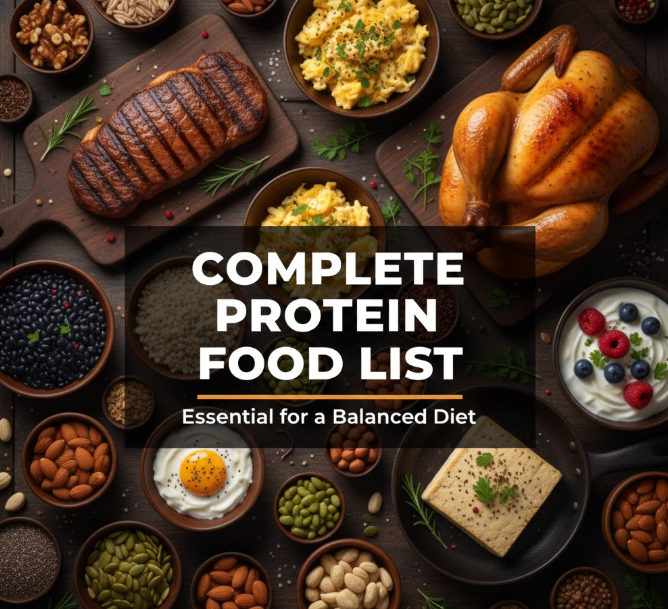
Protein is one of the most important nutrients your body needs. It helps build muscles, repair tissues, supports immunity, and keeps your energy levels stable. But not all protein is equal. Some foods are complete proteins, meaning they contain all the essential amino acids your body cannot make on its own. 🍳💪
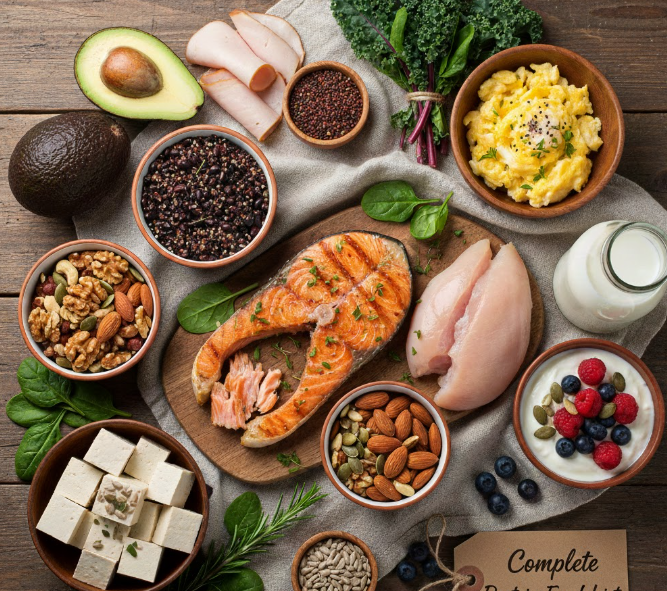
Here’s a complete guide to protein-rich foods that you can easily include in your diet. We’ll cover both animal-based and plant-based sources, along with practical tips to maximize your protein intake.
Animal-Based Complete Protein Foods
Animal proteins are naturally complete. They provide all nine essential amino acids in the right amounts, making them perfect for muscle growth and overall health.
1. Eggs
Eggs are a protein powerhouse. One large egg contains about 6 grams of high-quality protein. The white is almost pure protein, while the yolk contains healthy fats and vitamins. Eggs are versatile—you can boil, scramble, or make omelets. 🥚
2. Chicken Breast
Chicken breast is lean, packed with protein (about 31 grams per 100 grams), and low in fat. It’s perfect for anyone looking to build lean muscle. Grilled or baked chicken is the healthiest option.
3. Fish
Fish like salmon, tuna, and cod are not only rich in protein (20–25 grams per 100 grams) but also contain omega-3 fatty acids that support heart and brain health. 🐟
4. Dairy Products
Milk, cheese, and yogurt are excellent sources of complete protein. Greek yogurt is especially high in protein, with around 10 grams per 100 grams. Cottage cheese is another protein-rich option. 🥛🧀
5. Beef
Lean beef is rich in protein (26 grams per 100 grams) and provides important nutrients like iron and B12. Choose lean cuts to avoid extra saturated fats.
6. Pork
Pork, especially tenderloin, offers 22 grams of protein per 100 grams. It’s also rich in vitamins and minerals. Cook it properly to retain nutrients.
Plant-Based Complete Protein Foods
Some plant-based foods are complete proteins, while others need to be combined to cover all essential amino acids. Here’s a list of top plant-based sources:
1. Quinoa
Quinoa is a complete protein with 8 grams per cup cooked. It’s also gluten-free, high in fiber, and easy to digest. Perfect for salads, bowls, or breakfast porridge. 🌱
2. Soy Products
Tofu, tempeh, and edamame are all complete proteins. Tofu contains about 8 grams per 100 grams, while tempeh has 19 grams. Soy is versatile—you can stir-fry, grill, or add to soups.
3. Buckwheat
Despite its name, buckwheat is not wheat and is gluten-free. It’s a complete protein with 6 grams per 100 grams cooked. Ideal for pancakes, porridge, or as a rice substitute.
4. Chia Seeds
Chia seeds provide 4 grams of protein per 28 grams (2 tablespoons) and are rich in omega-3 fatty acids. They can be added to smoothies, yogurt, or baked goods. 🌾
5. Hemp Seeds
Hemp seeds contain 10 grams of protein per 3 tablespoons and are considered a complete plant-based protein. They’re great for salads, smoothies, or sprinkled over oatmeal.
6. Spirulina
Spirulina, a type of blue-green algae, is extremely protein-dense with 57 grams per 100 grams. It’s usually consumed in powdered form in smoothies or health drinks.
Protein-Rich Combinations for Vegetarians
Some plant-based foods aren’t complete on their own but can become complete when paired. Here are some examples:
| Food Combination | Benefits | Protein Content (approx.) |
|---|---|---|
| Rice + Beans | Complete protein + fiber | 12 g per cup |
| Peanut Butter + Whole Wheat Bread | Balanced amino acids | 10 g per serving |
| Hummus + Pita | Legumes + grains = complete protein | 8 g per serving |
| Lentils + Quinoa | Rich in iron + complete protein | 18 g per cup |
Tips to Maximize Protein Intake
-
Include protein in every meal 🍽️
-
Breakfast: eggs, Greek yogurt, or tofu scramble
-
Lunch: chicken, lentils, or quinoa salad
-
Dinner: fish, beef, or tempeh stir-fry
-
-
Snack smartly
-
Nuts, seeds, and cheese make great protein snacks.
-
-
Cook wisely
-
Avoid overcooking meat and fish to preserve protein quality.
-
-
Use protein powders if needed
-
Whey, casein, or plant-based powders can help reach your daily protein goal.
-
FAQs
Q1: How much protein do I need daily?
It depends on your age, weight, and activity level. Generally, 0.8–1 gram per kilogram of body weight is enough for adults. For athletes or those building muscle, 1.2–2 grams per kilogram is recommended.
Q2: Are plant proteins as good as animal proteins?
Some plant proteins are complete (like quinoa, soy, chia), but others need to be combined to cover all essential amino acids. With proper planning, plant proteins can be just as effective.
Q3: Can I get too much protein?
Excess protein can strain the kidneys over time, especially if you have pre-existing kidney issues. Stick to recommended daily amounts unless supervised by a healthcare professional.
Q4: Is protein powder necessary?
Not for everyone. Most people can meet protein needs through whole foods. Protein powders are convenient for athletes or busy individuals.
Q5: Which protein source is best for weight loss?
Lean meats, fish, eggs, Greek yogurt, and plant-based proteins like tofu and lentils are great because they are filling, low in calories, and high in nutrients.
Conclusion
Protein is essential for energy, growth, and overall health. By incorporating a mix of animal and plant-based complete proteins, you can meet your body’s needs without feeling deprived. 🍗🥦🍳
Remember, variety is key. Mix and match foods, experiment with recipes, and enjoy the process of eating nutrient-dense, protein-rich meals.