Why the Way You Cook is More Important than You Think
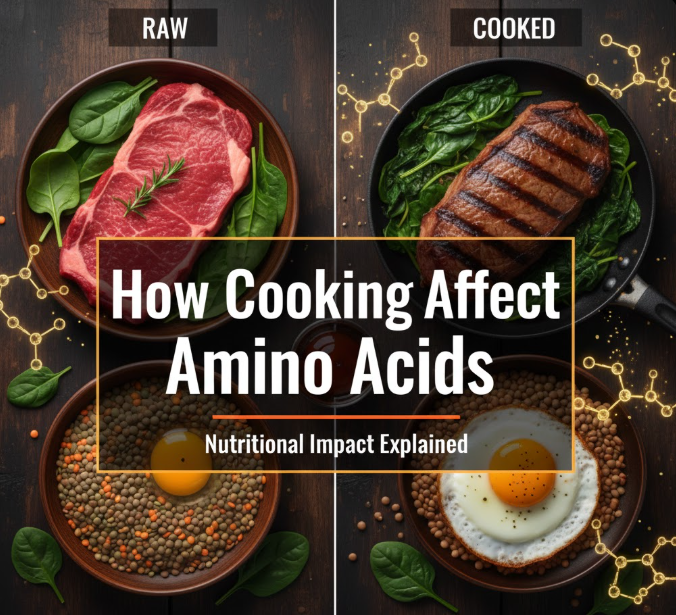
Each time you warm food, there is something interesting going on at the molecular scale. Your chicken, beans or eggs begin to alter shape and structure of its proteins. These proteins consist of smaller building blocks known as amino acids and cooking modifies them to either benefit or harm the use of proteins within the body.
Consider the amino acids as little LEGO blocks that construct all the parts of your body: muscles, hormones and immune cells. When you prepare food, you have to deal with the rearrangement of such blocks. This makes them easier to hold and grab by your body sometimes. In other instances, it can imprison them as well as annihilate them altogether.
It is not just a science lesson to learn how heat will modify these protein building blocks. It’s applied experience which is able to make you make better choices in the kitchen on a daily basis. Grilling steak, boiling eggs or roasting vegetables, temperature and time you select has a direct influence on the nutrition you receive with your meal.
What happens to the amino acids when the heat is enabled, that is what we are going to investigate.
Introduction: What the Amino Acids Do in Your Body
Then we can get to the subject of cooking, but you have to know what amino acids are and why they are important.
There are 20 amino acids that are used by your body to construct proteins. Nine of them are referred to as essential in the sense that your body will not be able to produce them and instead you have to acquire them through food. The remaining 11 are considered as being non-essential since they could be produced by other nutrients by your body.
Such essential amino acids are:
- Leucine (helps build muscle)
- Lysine (growth and calcium absorption)
- Methionine (assists your liver to work on fats)
- Tryptophan (this is converted into serotonin, the feel-good chemical by your body)
- Valine (gives power to the muscles)
- And four others which also have distinct roles
You are supplying these amino acids to your body when you eat protein-rich foods, such as meat, fish, eggs, dairy, beans or nuts. The proteins are broken down into single amino acids by your digestive system, and are carried through your bloodstream to the parts of the body where they are required.
The trick lies here, however: these amino acids are altered in their structure by cooking. Their availability is increased by certain changes. They are rendered less useful or even harmful by others.
The Good Side: When Cooking Helps Amino Acids
Digestion of Tough Proteins is Facilitated Through the Action of Gastric Juice
Raw proteins are frequently folded and twisted to a complex shape. Your digestive enzymes must struggle to unwind them and get inside the amino acids. Cooking exposes these proteins to heat which makes them denature, or in other words, unfold and assume a different shape.
This development is normally a positive one. It opens up more amino acids to your digestive enzymes and they are less difficult to digest and assimilate. An example is that cooked egg whites are nearly 91 percent digestible, whereas raw egg whites are nearly 51 percent digestible. That’s a massive difference.
Killing Harmful Substances
Natural compounds on many raw plant proteins block digestion. Beans have trypsin inhibitors that interfere in the digestion of protein by enzymes in your body. The same is the case with raw soybeans.
These inhibitors are destroyed by cooking. Not only are you making them soft when you boil and/or pressure cook beans but you are destroying the chemicals that would not allow your body to access the amino acids in the beans. This is the reason why raw beans are likely to give one stomach cramps when cooked beans are healthy and simple to digest.
Making Food Safer
Raw meat animal proteins may contain harmful bacteria, such as Salmonella, E. coli, and Listeria. These bacteria do not influence the amino acids themselves, but they may severely get you sick. These pathogens are killed by cooking and thus the amino acids in meat, poultry and fish are safe to eat.
Dark Side: Amino Acids Destroyed by Cooking
Amino Acids Sensitive to Heat are Destroyed by Heat
Amino acids do not all react to heat the same way. Others are hard and firm whereas some disintegrate easily due to increasing temperatures.
Amino acids that are the most sensitive to heat are:
- Lysine (high temperatures destroy this one)
- Cysteine (can be used to produce harmful compounds during overcooking)
- Methionine (degrades under extended heating)
- Tryptophan (high temperature sensitive)
You begin to lose these precious amino acids when cooking foods at very high temperatures over an extended period of time. The most damage is caused by frying, grilling and roasting at temperatures above 300°F (150°C).
The Maillard Reaction: Flavour vs. Nutrition
When you brown meat or toast a piece of bread you are observing the Maillard reaction—a chemical reaction between amino acids and sugars resulting in hundreds of flavor and color compounds. It is this reaction that makes grilled steak crusty, bread golden and coffee richly scented.
The Maillard reaction is delicious, yet a nutritional cost is associated with it. In the process, certain amino acids, particularly lysine are bound with sugars in a manner that leaves them not available to your body. The darker the browning, the more lysine lost.
Research indicates that deeply grilled meat may lose up to 40 percent of its lysine values compared to meat that has been cooked lightly.
AGEs: Advanced Glycation End Products
Proteins and sugars might form compounds called AGEs when they are combined during high heat. An inflammatory, aging and chronic illness such as diabetes and heart disease are associated with these molecules.
Foods that are cooked using dry techniques (grilling, frying, roasting) and high temperatures generate a large amount of AGEs compared to those cooked using moist cooking techniques (boiling, steaming, poaching). The amino acids themselves are also contributing factors to AGE formation particularly when they are combined with sugars in the presence of extreme heat.
The Effect of Various Cooking Processes on Amino Acids
Boiling and Steaming
Temperature range: 212°F (100°C)
These gentle, moist-heat procedures produce low levels of amino acid destruction. This reduced temperature and water facilitates the maintenance of amino acids that are heat sensitive such as lysine and tryptophan.
Some amino acids may even leak into the cooking water, particularly in vegetables and legumes. When you throw away the cooking liquid, you are throwing away those nutrients. Remedy: add cooking water in soups or sauces.
Amino acid retention: 90-95%
Baking and Roasting
Temperature range: 300-450°F (150-230°C)
Moderate loss of amino acids occurs with browning, and takes place on the surface of foods when these methods are used, which are known as dry-heat methods. Amino acids are normally found more in the interior than the crusty part of baked or roasted foods.
Time matters here. Baked chicken breast that spends 25 minutes loses fewer amino acids compared to baked chicken breast that spends an hour.
Amino acid retention: 80-90%
Grilling and Broiling
Temperature range: 400-550°F (200-290°C)
High intensity heat of direct nature leads to a lot of amino acid damage, mainly lysine. The most damaged proteins, as well as the highest concentration of AGEs, are found in the burnt portions of grilled meat.
Amino acids may be guarded by marinating meat prior to grilling. The marinades which contain herbs and those in which lemon juice or vinegar are used prevent the damage by forming a protective layer.
Amino acid retention: 70-85%
Frying and Deep-Frying
Temperature range: 350-375°F (175-190°C)
Although frying can be hard on amino acids when the heat is high, the frying method can preserve them reasonably well in a short period of time. The oil forms a layer which traps moisture and nutrients. Nevertheless, the destruction of amino acids and formation of AGEs are enlarged by long-term frying or repeated use of oil.
Amino acid retention: 75-90% (depends on time and quality of oil)
Microwaving
Temperature range: Varies
One of the most suitable ways of preserving amino acids is through microwaving. Its rapid cooking duration and less heat exposure result in fewer damages as compared to most other processes. This cooks food from the inside, thereby reducing surface browning and Maillard reaction.
Amino acid retention: 90-95%
Pressure Cooking
Temperature range: 250°F (121°C)
Pressure cookers use steam to cook food quickly at temperatures slightly higher than boiling. The method still does not lower the quality of amino acid retention since the time of cooking is very minimal and the process requires the use of water.
Amino acid retention: 85-92%
The Temperature and Time Relationship
The important principle here is that the damage of amino acids does not only depend on temperature but on time and temperature combined.
At 400°F, 10 minutes of cooking results in loss of amino acids that are less than those that are lost during 2 hours at 300°F. A hot temperature would not necessarily be bad as long as cooking duration is brief. On the other hand, even long exposure to low temperatures (such as with slow-cooking) can still damage heat-sensitive amino acids.
Consider it a case of putting butter in the sun. A few minutes will not melt it all, but several hours will reduce it to liquid—in spite of the fact that the temperature of the sun has made no difference.
Special Considerations on Different Sources of Proteins
Meat and Poultry
All nine essential amino acids are well contained in animal proteins. They are quite stable in cooking, yet high heat food preparation still results in lysine loss and AGE formation.
Best practices:
- Cook until you reach safe internal temperatures (165°F for poultry, 145°F for beef) but do not overcook
- Use moist heat where possible
- Trim burnt or overly browned areas
- Do not reuse marinades that were in contact with raw meat
Fish and Seafood
Proteins of fish are less tough compared to meat ones. They break down at lower temperatures and cook quicker, which actually can be an advantage—you are not as likely to overcook and ruin amino acids.
Best practices:
- Cook until flesh is opaque and flakes easily
- Gentle techniques such as poaching, steaming or baking at low temperature are most effective
- Avoid grilling at high temperature for extended periods
Eggs
Eggs form one of the best sources of proteins as they are rich in all essential amino acids in perfect proportions. In fact, cooking enhances digestibility of egg protein significantly.
Best practices:
- Cook eggs fully in order to increase digestibility
- Do not subject to long high temperatures that harden proteins
- Amino acids are more preserved in scrambled, poached or soft-boiled eggs than in hard-fried eggs
Legumes and Beans
Anti-nutritional factors in plant proteins in beans and lentils need to be eliminated through cooking. Luckily, these proteins are rather heat stable.
Best practices:
- Soak beans before cooking to reduce cooking time
- Pressure cooking is the best method of retaining amino acids
- Do not discard cooking liquid—it is a source of nutrients
Dairy Products
Proteins found in milk are heat-sensitive. Lysine is destroyed by prolonged boiling and causes off-flavors. Nevertheless, pasteurization (brief heating) does not change amino acids significantly but eliminates bacteria.
Best practices:
- Heat milk gently and briefly
- Do not boil or simmer for long periods
- Prefer pasteurized milk to ultra-high-temperature (UHT) processed milk
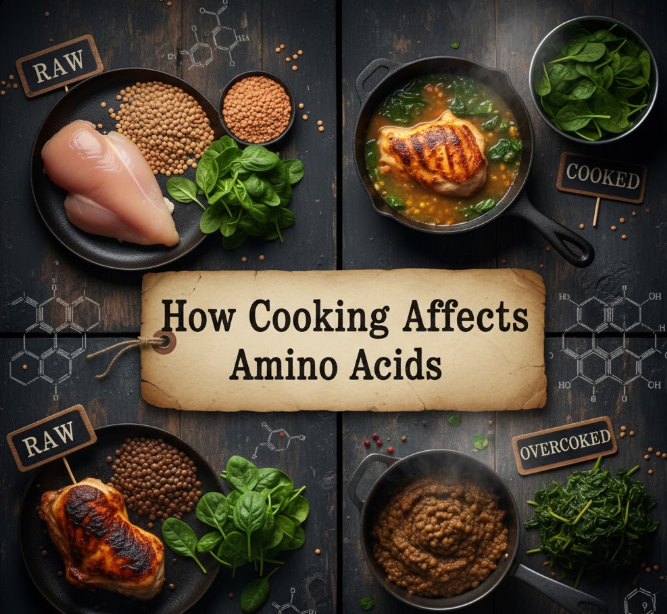
Smart Ideas to Conserve Amino Acids During Cooking
Strategy 1: Select Lower Temperatures
Cooking at lower temperatures for the right times when there is an option instead of high-heat blasting of food is better. An oven that has a temperature of 325°F retains more nutrients compared to a 450°F oven.
Strategy 2: Cook Quickly
The shorter the duration of time food is exposed to high temperatures, the lower the amino acid damage. This is the reason why stir-frying is a good choice since it uses a lot of heat yet short cooking time helps conserve nutrients.
Strategy 3: Use Moisture
Water-based cooking methods preserve amino acids better compared to dry-heat cooking methods. The water takes up some of the heat energy and does not allow the temperatures to be too high.
Strategy 4: Marinate Before Grilling
Research indicates that marinating meat at least 30 minutes before grilling will decrease the formation of AGEs by an estimated 50%. Protection is achieved by the antioxidants in herbs, spices, citrus juice, and vinegar.
Strategy 5: Don’t Char Your Food
The blackened crispy bits might taste good, but they include the most damaged proteins and the worst compounds. Cut out heavily burnt portions.
Strategy 6: Save Cooking Liquids
During boiling or steaming of foods, some amino acids are washed away in the water. Use this liquid in stews, soups or sauces to recapture such nutrients.
Strategy 7: Mix Cooking Methods
You do not need to select only one method. You can sear meat quickly to acquire flavor and then cook it slowly in the oven at a lower temperature. This minimizes nutrient damage.
The Whole Picture: Changes in Numbers of Amino Acids
| Cooking Method | Temperature (average) | Cooking Time (average) | Amino Acid Retention | AGE Formation |
|---|---|---|---|---|
| Boiling | 212°F (100°C) | 10-30 minutes | 90-95% | Very Low |
| Steaming | 212°F (100°C) | 8-25 minutes | 92-96% | Very Low |
| Microwaving | Varies | 2-10 minutes | 90-95% | Low |
| Pressure Cooking | 250°F (121°C) | 5-15 minutes | 85-92% | Low |
| Baking | 325-375°F (165-190°C) | 20-60 minutes | 82-90% | Moderate |
| Roasting | 350-425°F (175-220°C) | 30-90 minutes | 80-88% | Moderate |
| Stir-frying | 400-450°F (200-230°C) | 3-8 minutes | 85-90% | Moderate |
| Grilling | 400-550°F (200-290°C) | 8-30 minutes | 70-85% | High |
| Frying | 350-375°F (175-190°C) | 3-10 minutes | 75-88% | High |
| Deep-frying | 350-375°F (175-190°C) | 2-8 minutes | 75-85% | High |
Kitchen Hacks You Should Apply Today
Amino acids do not require a scientist to safeguard during cooking. The following are some changes that anyone can implement:
For breakfast eggs: Scramble on medium-low heat using a small amount of butter or olive oil. Remove from heat when they are still a little wet. They will finish cooking using residual heat.
For chicken breast: Bake at 350°F until the interior temperature is 165°F (approximately 25-30 minutes). Allow to rest 5 minutes before slicing—this will retain juices and nutrition.
For beans: Use a pressure cooker or Instant Pot. This preserves amino acids and saves hours of stovetop simmering.
For fish: Steam or poach in gently simmering liquid with herbs and lemon. Cook until the flesh becomes opaque.
For vegetables containing protein: Stir-fry on high heat so that they are crisp-tender and not soft and overcooked.
For grilled meat: Marinate first, turn regularly to avoid charring, and remove the meat when it reaches safe temperatures.
Frequent Misconceptions on Cooking and Protein
Myth: Raw Food Diets Conserve More Amino Acids
Reality: Although some amino acids are actually destroyed during cooking, most proteins are made more digestible and usable during cooking. The gains of cooking often supersede the losses.
Myth: Microwaving Kills More Nutrients Than Other Ways
Reality: Microwaving is actually one of the better methods of preserving amino acids and other nutrients than most other cooking methods due to the short cooking durations.
Myth: All Browning is Harmful to Amino Acids
Reality: Light browning does not produce much damage to amino acids. The highly burnt and blackened regions are those that harbor large quantities of damaged proteins and harmful substances.
Myth: Slow Cooking is Gentler Regarding Nutrients
Reality: Although slow cooking is done at low temperatures, the long cooking period will cause degradation of heat-sensitive amino acids. Faster food preparations tend to retain nutrients better.
Coming to Terms with the Trade-offs
The truth of the matter is the following: loss of some amino acids during cooking is not something to be ashamed of. The trick is to strike the right balance between food safety, digestibility, taste and nutrient retention.
Grilling steak may result in a loss of lysine, and nevertheless, it remains an excellent source of protein that can be effectively used by your body. Even when cooking may cause some of the sensitive compounds in beans to break down, cooked beans offer much more usable protein than raw beans.
Good should not be the adversary of perfect. Safely prepare your food, eat the delicious things you enjoy, and go gentler when you can—but there is nothing to worry about concerning small amounts of nutrient loss. Well-cooked food is still able to nourish your body with the help of the amino acids contained in it.
The Bottom Line on Food and Amino Acids
Amino acids are transformed in complex ways by cooking. Certain alterations assist your body in getting and utilizing these protein building blocks in a simpler way. Other changes weaken or ruin some amino acids, especially when you have to use a lot of heat.
The best cooking techniques that maintain amino acids are the ones that involve the use of moisture as well as moderate temperatures: steaming, microwaving, pressure cooking and gentle boiling. The processes that are most destructive to amino acids include high-heat treatment such as grilling and frying—these can be included in a healthy diet but only in moderation and in a well-balanced manner.
Variety is your best bet. Mix up cooking methods throughout the week. Enjoy grilled food on occasions, but depend on gentler modes of cooking most of the time. Give attention to safe and thorough cooking of food without overcooking or charring.
Keep in mind: cooked foods are usually great sources of nutrients despite the fact that some amino acids are lost. No matter the mode of cooking, your body is immensely good at taking what it requires out of the food you consume.
For more comprehensive information about amino acids and their roles in nutrition, explore additional resources and guides.
Frequently Asked Questions
Does cooking destroy all the food protein?
Cooking does not eliminate all protein—no. Although heat may destroy some amino acids and decrease their availability, most proteins remain stable and are made more digestible with cooking. Normal retention of amino acids is 70-95%, which varies with the mode of cooking.
What is the best way to cook food and retain the highest number of amino acids?
Preservation of the majority of amino acids (usually 90-95%) is achieved by steaming, microwaving, and pressure cooking. These techniques incorporate moisture, as well as relatively lower temperatures or reduced cooking periods, which reduces the destruction of amino acids.
Are amino acids lost by boiling meat?
Some amino acids are leached into boiling water, although this is usually only to a small extent (5-10%). The majority of amino acids remain in the meat. Lost nutrients can be recovered by using the cooking liquid in soups or sauces.
Is there more protein in raw or cooked meat?
Not usually. Although raw protein has all the amino acids intact, your body is only capable of digesting around 50-60 percent of raw animal protein as opposed to 90-95 percent of cooked protein. Cooking makes the amino acids more accessible, and although some are lost, the overall benefit is positive.
Does grilling meat render it less nutritious?
Grilling has the ability to lower some amino acids (particularly lysine) by 15-30 percent and forms potentially harmful compounds in case of charring of meat. Nevertheless, grilled meat is still nutritious. To limit the harm, marinate, prevent burning, and do not grill at excessively high temperatures.
How can I know whether I am overcooking protein?
Examples of signs of overcooked protein include dryness, toughness, and dark brown or charred appearance. Meat will dry and become stringy, fish disintegrates and eggs will become rubbery. Use a food thermometer to cook proteins to safe temperatures without overcooking.
Are plant proteins different in terms of cooking compared to animal proteins?
Yes, anti-nutritional factors that prevent digestion frequently require the cooking of plant proteins. They are more resistant to heat compared to animal proteins. Cooking beans and lentils is essential, whereas animal proteins may be consumed rare (providing it is safe).
Is it possible to undo the harm of cooking on amino acids?
No, it is not possible to reverse the effects of heating on amino acids once they are destroyed. Nevertheless, the body can still make use of most of the remaining intact amino acids, and a varied diet will be able to guarantee you get all the amino acids you require despite some losses during cooking.
External Resource: For evidence-based information on protein digestion and absorption, visit the National Institutes of Health