What are Amino Acids and Why Your Body Needs Them
Consider amino acids as the building blocks with the help of which your body builds everything—muscles, hormones. Similar to LEGO items joining together to create magnificent structures, the same amino acids are the same building blocks that make you a living and a thriving protein.
There are thousands of proteins in your body and each one of them is specialized in something. There are certain proteins that construct and rebuild your muscles when you exercise. There are others that produce enzymes that aid in food digestion. When you are sick, some develop antibodies that combat infections.
Your body utilizes 20 amino acids. Nine of them are termed as being essential since your body does not produce them internally. These are absolutely to be got out of food. The remaining 11 are considered as non-essential since your body is able to produce them with the help of other nutrients.
Adequate intake of the proper amino acids in the diet is not simply a matter of protein consumption. It is all about consuming the appropriate types of foods at the appropriate proportions. In this article, you will learn all the steps necessary to create a balanced diet that provides your body with all the amino acids. For more comprehensive information about amino acids, visit aminoacidsguide.com for detailed resources and guides.
The Nine Essential Amino Acids You Need
Categorizing these nine amino acids as essential means they should be consumed on a regular basis. The fact that these nine amino acids are essential implies that they need to be taken continuously.
These are the amino acids that you cannot make by yourself, and that is why you have to include them into your diet:
Histidine aids in the growth and repair of the body. It is also the source of histamine, which is vital in your immune system and digestion.
Isoleucine makes you energetic and recovers your muscles after exercising. It also assists your body to control the levels of sugar in the blood.
Leucine is the star muscle-building protein. It initiates the mechanism that generates new muscle protein and the process of recovery of wounds quicker.
Lysine is the collagen-forming amino acid that ensures you have smooth skin and strong bones. It is also useful in contracting calcium into your body.
Methionine is almost a cleaning agent to your body that assists in clearing of toxins. It is also involved in the development of new tissues.
Phenylalanine assists in the production of brain chemicals which manage your mood and keep you alert. It is transformed into another valuable amino acid, tyrosine, by your body.
Threonine is beneficial to the immune system, and it aids in the support of the protective sheath that covers your nerves.
Tryptophan is known to produce serotonin which is the feel good chemical in your brain. It assists you in getting sleep and is in a good mood.
Valine gives strength to your muscles, making them develop. It is a collaborator of leucine and isoleucine.
Complete Proteins vs. Incomplete Proteins
Not every source of proteins is equal. Foods have all the nine essential amino acids in the quantities that your body requires. These are referred to as complete proteins. Other foods lack one or more of the essential amino acids and are thus considered to be incomplete proteins.
Complete Protein Sources
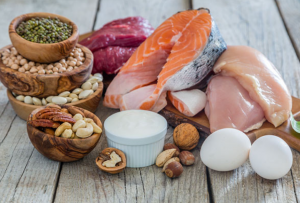
Animal products are perfect champions of proteins. Eggs, chicken, beef, fish, milk, cheese, and yogurt are all sources of all the essential amino acids that your body needs. You get an ideal packaged amino acids when you have a chicken breast or scrambled eggs.
Also surprisingly, several plant foods are complete protein foods. Quinoa is a grain-like seed that is complete in all the essential amino acids. Soy and foods derived out of them (tofu, tempeh, edamame) are complete proteins as well. The list of complete proteins of plant origin is topped off with buckwheat and hemp seeds.
Incomplete Protein Sources
Incomplete proteins are found in most plant foods. Whole grains, beans, lentils, nuts, seeds, and others lack or are low in one or more of the essential amino acids. Rice is low in lysine. Beans are low in methionine. Corn does not contain tryptophan and lysine.
Does this indicate that plant proteins are bad? Absolutely not! All you need to do is to eat them in a strategic manner.
The Magic of Protein Combining
And here is the good news of vegetarians and vegans: you do not have to have complete proteins in every single meal. Your body is smart. It holds the amino acids and synthesizes them during the day.
The eating of various incomplete proteins together complement the weaknesses of each other. This is referred to as protein combining or complementary proteins.
Classic Protein Combinations
Rice and Beans – The combination of rice and beans forms a complete protein. Rice ensures the availability of methionine that is deficient in beans, and beans ensure lysine which is missing in rice.
Peanut Butter on Whole Wheat Bread – The same thing happens with peanut butter on whole wheat bread. The amino acids gaps of the wheat and peanuts complement each other.
Hummus and Whole Wheat Pita – Another ideal match is hummus (chickpeas) and whole wheat pita. The chickpeas and the wheat complement each other.
Lentil Soup with Whole Grain Bread – A slice of whole grain bread in lentil soup will provide you with all the essential amino acids.
There is no need to worry about blending proteins at each and every meal. The body will get all the amino acids required as long as you are taking a variety of protein sources in the course of the day.
How Much Protein Do You Really Need?
The quantity of protein required depends on your age, weight, activity level and health objectives.
Basic Guidelines
Average individual requires approximately 0.8 grams of protein to every kilogram of body weight on a daily basis. This is approximately 55 grams of protein a day in case you weigh 150 pounds (68 kilograms).
More is required by athletes and individuals involved in exercise, which is 1.2 to 2.0 grams per kilogram. The increasing adolescents require additional protein to help them grow.
Even the elderly are supposed to be targeted at the upper end, since their bodies are less efficient in the use of protein.
What Does This Look Like in Real Food?
| Food | Serving Size | Protein Content |
|---|---|---|
| Chicken breast | 3 ounces | 26 grams |
| Salmon | 3 ounces | 22 grams |
| Greek yogurt | 1 cup | 20 grams |
| Eggs | 2 large | 12 grams |
| Cooked lentils | 1 cup | 18 grams |
| Almonds | 1/4 cup | 8 grams |
| Quinoa | 1 cup cooked | 8 grams |
| Black beans | 1 cup | 15 grams |
Building Your Balanced Amino Acid Meal Plan
One does not have to perform complicated arithmetic or food tracking applications in order to create a balanced diet of amino acids. Here are the basic tips that can help you get the right things.
Start Your Morning Right
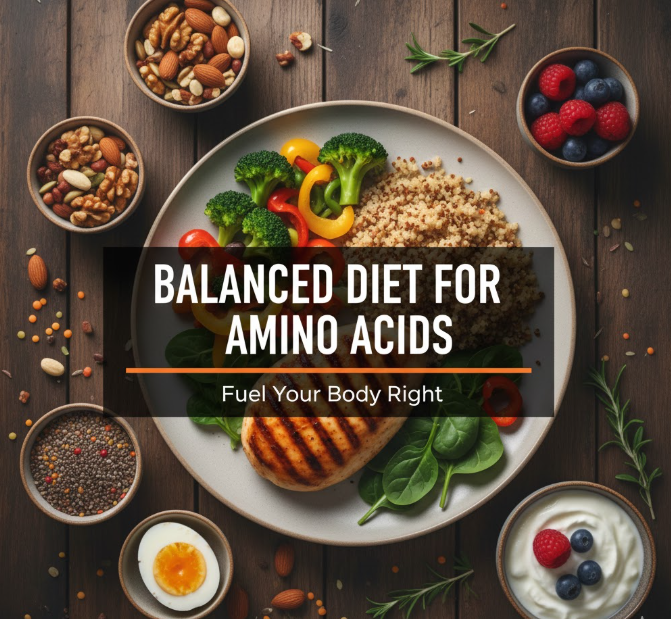
The breakfast will predetermine your amino acid level. This is because scrambled eggs that are mixed with cheese and whole wheat toast will give you all the protein along with supplementary amino acid in the grains. Nuts and seeds on Greek yogurt is a high-energy hit of protein (amino acids). Even oatmeal can be a protein powerhouse when milk, nut butter or protein powder are added.
Power Up Your Lunch
Protein is your main attraction in lunch. Grilled chicken salad and quinoa will provide you with all your proteins in two sources. Complementary proteins are formed by a whole grain bun with a side of beans and a veggie burger. Tuna with whole wheat crackers has marine and plant protein that is a match.
Dinner Done Right
Another chance to fill yourself with essential amino acids is your evening meal. Salmon combined with brown rice and vegetables contains omega-3 fatty acids and complete protein. Plant proteins are combined effectively with stir-fried tofu mixed with mixed vegetables on rice. Although it is a simple pasta, it becomes a source of protein when you put grilled chicken or white beans into it.
Smart Snacking
Snacks will add up to your daily amino acid intake. Prior to meals, hummus and vegetables, cottage cheese and fruit, trail mix with nuts and seeds, or hard boiled eggs all offer good supplies of amino acids.
Special Considerations for Vegetarians and Vegans
The vegetarian diet requires a bit of additional care when it comes to the amino acids, yet there is absolutely nothing like you cannot get everything you need without meat.
Key Strategies
Consume plant proteins of a broad selection on a daily basis. Don’t count on beans alone or nuts alone. Combine legumes, whole grains, nuts, seeds, and soy foods all day long.
Eat soy products on a regular basis. Tofu, tempeh and edamame are complete proteins that make the planning of vegetarian meals easier.
The nutritional yeast could be considered because it is a source of all the necessary amino acids and also gives foods a cheese-like taste.
Be careful of lysine. Most of the plant foods are low in this amino acid, therefore, consume as much legumes (beans, lentils, peas) as possible since they are high in lysine.
Sample Vegetarian Day
Breakfast: Oatmeal prepared using soy milk, with chia seeds and almonds on it.
Snack: Apple and peanut butter.
Lunch: Black beans, avocado, and vegetables in quinoa bowl.
Snack: Hummus and whole grain crackers.
Dinner: Tofu stir-fry with brown rice and mixed vegetables.
This diet plan offers nutritional essential amino acids in the form of complementary proteins of plants.
Signs You’re Not Getting Enough Amino Acids
Your body will show that something is wrong with your protein consumption. Be aware of the following warning symptoms:
Constant fatigue – After sleeping well, you are always feeling tired. Amino acids aid in the production of energy-carrying molecules and thus low intake makes one to be tired.
Hair loss or thinning – Your hair is falling out or thinning out. Hair is protein in that it comprises of keratin which is formed using amino acids.
Frequent illness – You get sick frequently. Proteins are the antibodies that combat infections and hence lack of enough amino acids undermines your immune system.
Muscle weakness – You feel that your body muscles are weak or you are losing muscles. Lack of sufficient amino acids causes the body to deteriorate muscle tissue and obtain what it requires.
Slow healing – Scrapes and cuts take ages to heal. Amino acids are required to build up damaged body tissues.
Mood changes – You have mood swings or get depressed. There are some amino acids that form brain chemicals to control your feelings.
In case you observe some of these symptoms, a doctor or nutritionist should discuss your diet.
Amino Acids and Exercise Performance
Fitness enthusiasts and athletes have unique requirements of amino acids. Each time you work out, particularly when you are engaging in a resistance workout, you are tearing tiny holes in your muscle fibers. The amino acids are used by your body to repair these tears, thus, becoming stronger and bigger.
Timing Matters
Consumption of protein two hours after exercise accelerates muscle recovery. It is during this anabolic window that your body is the most efficient in utilizing the amino acids in building your muscles.
Leucine’s Special Role
Leucine is the most crucial among the amino acids in muscle building. It triggers a process in your cells which initiates the process of muscle building. Foods that are particularly rich in leucine are chicken, beef, fish, eggs, and dairy products.
Branched-Chain Amino Acids (BCAAs)
The BCAAs are made up of leucine, isoleucine and valine. Supplements that are referred to as BCAAs may be found at nutrition stores. These comprise three amino acids namely: leucine, isoleucine as well as valine. These are directly supplied to your muscles to provide energy to them when exercising. But, majority of individuals who consume an adequate amount of protein initially obtain the required amount of BCAAs in food and do not require supplements.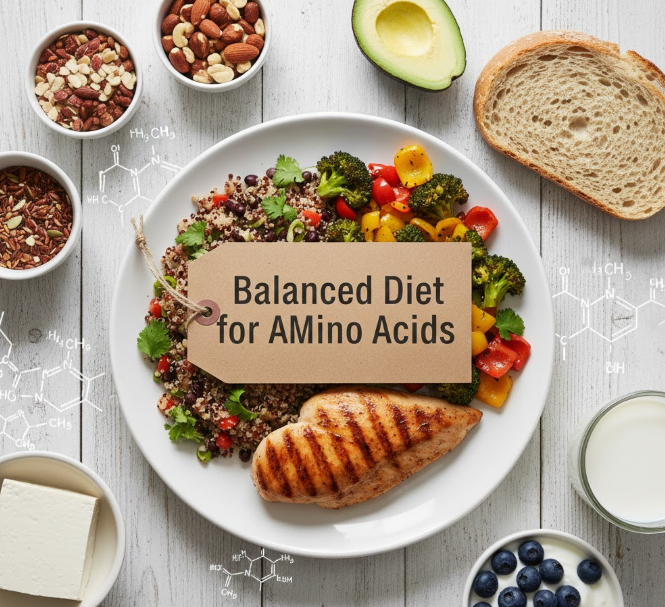
Common Myths About Protein and Amino Acids
Amino acids are involved in various complex reactions within the body that are easy to mistakenly identify.
Myth: To gain muscle you should use protein supplements.
Fact: Whole foods will give you all the amino acids required. Supplements are not essential, but convenient to the majority of people.
Myth: The more protein the better.
Fact: There is a limit on the amount of protein that your body can absorb at a given time. The protein surplus is turned into fat or transformed to energy.
Myth: Plant proteins are lower than animal proteins.
Truth: The majority of plant proteins are incomplete, but splitting various plants through the day will provide you with all the essential amino acids.
Myth: You have to eat meat to obtain the sufficient protein.
Fact: There are numerous vegetarian and vegan athletes who succeed on vegetarian diet plans.
Myth: Consumption of protein makes you bulky.
Fact: It does not just need to eat protein to build up a lot of muscle; it needs intense resistance training.
Beyond Muscle Building: Other Roles of Amino Acids
Although we tend to think of amino acids in connection with muscles, their role in the body is far much more.
Brain Function
Various amino acids are converted to neurotransmitters which are the chemicals that allow your brain cells to communicate. Tryptophan is transformed into serotonin that controls sleep and mood. Phenylalanine is converted to tyrosine and the resulting dopamine regulates motivation and the reward feeling.
Immune System Support
Amino acids are made into antibodies by your immune system. These proteins recognize and counteract vicious bacteria and viruses. In the absence of proper amino acids, it reduces your capacity to fight infections.
Hormone Production
Numerous hormones consist of protein produced out of amino acids. Insulin is a protein, a control of blood sugar. Growth hormone that aids children to grow and adults to maintain muscles also has its origin in amino acids.
Skin and Hair Health
The protein, collagen, which ensures that your skin is firm and youthful needs certain amino acids, such as lysine, proline, and glycine. Keratin that comprises your hair and nails require cysteine and other amino acids.
Foods Rich in Specific Essential Amino Acids
There are moments when you have to increase the level of the specific amino acids. Here’s where to find each one:
High in Histidine: Meat, fish, eggs, dairy, soy, beans
High in Isoleucine: Eggs, chicken, lamb, cheese, fish
High in Leucine: Beef, chicken, pork, fish, soybeans, cottage cheese
High in Lysine: Red meat, pork, poultry, fish, eggs, dairy, legumes
High in Methionine: Eggs, fish, Brazil nuts, meat, sesame seeds
High in Phenylalanine: Meat, fish, eggs, dairy, soybeans
High in Threonine: Cottage cheese, poultry, fish, meat, lentils
High in Tryptophan: Turkey, chicken, milk, cheese, nuts, seeds
High in Valine: Cheese, beef, chicken, fish, mushrooms, peanuts
Making Your Amino Acid Diet Sustainable
The most effective diet is the one that you can maintain over a long period of time. The following are some suggestions on how to make your amino acid-rich diet sustainable:
Meal prep on Sundays in order to have constant supply of protein-rich foods. Roast a few chicken breasts, boil a dozen eggs, or cook a large portion of beans.
Keep convenient protein sources around. Canned tuna, Greek yogurt, string cheese, roasted chickpeas and nut butter do not need to be cooked.
Don’t worry about perfection. The lack of a protein objective will not always be a problem to your health.
Listen to your body. In case you are hungry all the time, then you may require more protein. In case you feel slow, examine the amino acid consumption.
Make it delicious. The consumption of food must not be a burden. Discover recipes that contain high proteins. For evidence-based nutrition information, check out the Academy of Nutrition and Dietetics for professional guidance.
Frequently Asked Questions
Is it possible to obtain all the necessary amino acids from plants?
Yes, definitely. Plant proteins should be eaten in variety all throughout the day, yet it is quite possible to get all the amino acids that you need without animal foods. Pay attention to legumes, whole grains, nuts, seeds, and soy.
What is the duration of the amino acids in my body?
Your body has a pool of amino acids which is constantly replenished and used up. Each of the amino acids would circulate in just a few hours and this is the reason why it is necessary to eat protein throughout the day and not once a day.
Are amino acid supplements necessary to me?
Majority of the population does not have to take amino acid supplements when they follow a balanced diet and get sufficient proteins. First save your money and concentrate on whole foods. Supplements should only be taken based on the recommendation of a doctor or a dietitian due to a certain medical need.
What is the consequence of overconsumption of protein?
The protein who is not used is converted to energy or turned into fat like excess carbohydrates. Extensive protein consumption in both the short and long term can put a strain on the kidney when you already had kidney issues but normal kidney functions can easily cope with the normal high protein diets.
Are food and amino acids supplements comparable?
No. Whole foods contain amino acids and other vitamins, minerals, fiber and other good compounds that are not found in supplements. Protein in the food is also highly absorbed and utilized by your body.
Is it possible that amino acid deficiency will result in hair loss?
Yes. Given that hair is composed of protein, a lack of sufficient amino acids may lead to the thinness of hair, brittle hair, or loss of hair. Nevertheless, there are numerous other reasons that lead to loss of hair hence proper diagnosis by a physician.
What is the rate of action of amino acids following meals?
It takes 15-30 minutes after eating to trigger the process of your body breaking down protein and absorbing amino acids. The majority of amino acids are absorbed in your blood no more than 3-4 hours in the post-meal period.
Wrapping It All Together
It is not a hard task to construct a balanced diet of amino acids because you only need to know the fundamentals. Make sure to consume many different sources of proteins. With animal products, it is so easy to obtain all the essential amino acids. When you maintain a plant-based diet, mix various sources of proteins to have everything.
It is important to remember that amino acids do not just build muscles. They improve your immune system, produce brain chemicals, generate hormones and maintain healthy skin and hair. All body cells need amino acids.
Make it a little step by step, firstly adding one food rich in protein per meal. Be mindful of the physical sensation of the body. Record your vitality, exercise performance, and well-being. Being able to feed your body with complete amino acids on a regular basis, you will probably see the improvements in multiple fields of your health.
Optimal amino acid nutrition is not achieved in a sprint. Make sustainable changes to make them lifelong. You will be rewarded with more energy, a stronger body, a sharper mind and a healthier body.