What are Amino Acids and Why Should You Care?
Consider the case of amino acids as miniature building blocks that form proteins in your body. The same way LEGO pieces can fit together to create great works of wonder, amino acids can fit together to form the proteins that make you strong and healthy.
Your body uses these building blocks in nearly everything. They are good at strengthening muscles, repairing lacerations, staving off illness, and even influencing your mood. Your body cannot perform well in the absence of sufficient amino acids.
The best part here is that whole foods are loaded with these vital nutrients. When you consume natural foods, which are not processed, then you have access to amino acids in their most natural and beneficial state.
Learn About the Two Categories of Amino Acids
There are 20 amino acids that are handled by your body, although they belong to two major groups that are important concerning your diet.
The Essential Amino Acids: The Ones You Should Eat
These nine amino acids are known to be essential because they cannot be produced by your body. You simply must have these from food:
- Histidine
- Isoleucine
- Leucine
- Lysine
- Methionine
- Phenylalanine
- Threonine
- Tryptophan
- Valine
The absence of at least one of them may lead to issues in the long run. These nine need to work together in order to keep your body healthy.
Non-Essential Amino Acids: These Are Those That Are Produced by Your Body
The remaining 11 amino acids are known as non-essential although the term is misleading. They’re super important too! When you are eating a balanced diet, your body can just create them using other nutrients.
Complete Versus Incomplete Proteins: What Is the Difference?
This concept will assist you in knowing the foods you should consume that will yield the greatest power of amino acids.
Complete proteins are the ones that have all nine essential amino acids in quantities that your body could utilize effectively. The majority of animal products make it into this category.
Incomplete proteins lack one or more essential amino acids, or are insufficient in them. Most plant foods are never complete in themselves, and you can mix them to get all that you want.
Best Whole Food Sources Rich in Amino Acids
Now, we will discuss the most important building blocks that are supplied by the best natural foods.
Animal Sources: The Strongest Sources of Amino Acids
Animal products are complete proteins thus efficient sources of amino acids.
Eggs: The Ultimate Protein Source in Nature
Eggs have been recognized as the gold standard of proteins. A single egg provides approximately 6 grams of complete protein containing all the essential amino acids. The protein is mostly found in the egg white, however, do not omit the yolk, which is also a great source of nutrients and a little protein.
Chicken and Turkey: Lean Protein Champs
Poultry is a good source of amino acids in small amounts of fat. Approximately 26 grams of protein is provided by a 3-ounce portion of chicken breast. Turkey is also equally impressive, and it has large quantities of tryptophan that make you feel relaxed and drowsy.
Fish and Seafood: Amino Acid Treasures of the Ocean
Salmon, tuna and cod fish provide complete proteins and omega-3 healthy fats. A salmon fillet may contain 40 grams of protein or higher. Although it is low in calories, shrimp has approximately 20 grams of protein in 3 ounces.
Benefits of Red Meat: Beef and Pork
All the necessary amino acids are provided by lean beef and pork cuts. Lean beef, 3 ounces, approximately has 25 grams of protein. These are meats that are particularly high in leucine that builds muscles.
Dairy Products: Milk, Cheese, and Yogurt
Dairy foods contain two kinds of proteins: whey and casein which are complete proteins. Greek yogurt is even better with approximately 15-20 grams of protein per cup. Another winner is cottage cheese that contains 14 grams in a half-cup serving.
Plant-Based and Vegetarian Sources of Proteins
Yes, there are plants that provide all the necessary amino acids without any complementary requirement!
Quinoa: The Superstar Ancient Grain
Quinoa is not common among the grains as it is a complete protein. A single cup of cooked quinoa gives approximately 8 grams of protein containing all the essential amino acids. It is technically a seed and not a grain and that is why it is more nutritious.
Soybeans and Soy Products
The plant kingdom champions in terms of protein are soybeans. Edamame (young soybeans) contains 17 grams of complete protein in a cup. Tofu, tempeh and soy milk are also good sources of amino acids.
Buckwheat: It Is Not Wheat!
Buckwheat, which is a seed related to rhubarb, was named so, despite its rhubarb-related name. It has all the necessary amino acids and provides approximately 6 grams of protein per cooked cup. Buckwheat is ideal when one is gluten-free.
Hemp Seeds: Small but Mighty
Only 3 tablespoons of hemp seeds will provide you with 10 grams of complete protein. These seeds have a good taste and can be blended in a smoothie or sprinkled on a salad.
Plant Foods That Are Complete Protein Combining Foods
Natural protein combinations came into existence due to many cultures whose traditional food pairings were discovered to be good.
Rice and Beans: A Classic Dish
This combination is made possible since rice is a low source of lysine and high source of methionine and beans are a high source of lysine and low source of methionine. The combination of these forms a complete protein. You do not have to eat them at the same meal but just once during the day suffices.
Whole Wheat Bread and Peanut Butter
It is a clever protein blend that is a childhood favorite. Peanuts contain lysine which is low in wheat. On two whole wheat bread slices with two tablespoons of peanut butter, there is approximately 15g of protein.
Hummus and Whole Grain Pita
Chickpeas (in hummus) and wheat (in pita) complement one another in terms of their amino acid constituents. Thousands of years have been spent building healthy populations on this Mediterranean blend.
The Amino Acid Content in Popular Foods: Comparison
| Food (3 oz serving) | Total Protein | Essential Amino Acids | Protein Quality |
|---|---|---|---|
| Chicken Breast | 26g | Complete | Excellent |
| Salmon | 22g | Complete | Excellent |
| Eggs (2 large) | 12g | Complete | Excellent |
| Greek Yogurt (1 cup) | 20g | Complete | Excellent |
| Quinoa (1 cup cooked) | 8g | Complete | Very Good |
| Tofu | 8g | Complete | Very Good |
| Black Beans (1 cup) | 15g | Incomplete* | Good |
| Brown Rice (1 cup) | 5g | Incomplete* | Good |
*Complete in complementary proteins.
Health Benefits of Obtaining Amino Acids from Whole Foods
Consumption of amino acids from whole foods and not supplements has specific benefits. For more comprehensive information on amino acids and their benefits, explore additional resources.
Muscle Building and Repair
The branched-chain amino acids (BCAAs) include leucine, isoleucine and valine and directly assist in the process of building and repairing muscles. As you take whole foods that contain a lot of protein after a workout, the amino acids quickly fly to the muscles to begin the reconstruction.
Whole food sources are the sources of these amino acids, and other nutrients that facilitate the utilization of these amino acids by your body.
Better Weight Management
Whole food protein maximizes your fullness as compared to carbs or fats. This is because protein substances (amino acids) will signal your brain that you are full. High protein foods also need more energy to digest thus burning more calories.
Stronger Immune System
Protein is what your immune cells are composed of. Individual amino acids such as glutamine and arginine help the immune system. Due to the consumption of different whole food protein sources, your immune system gets the raw materials it requires to defend you.
Improved Mood and Brain Function
Neurotransmitters are the chemicals your brain uses to regulate your mood and thoughts, and they’re created with the help of amino acids. Tryptophan is converted to serotonin, which makes you feel good and relaxed. Tyrosine is converted to dopamine that makes you feel motivated and focused.
Better Sleep Quality
Whole foods contain tryptophan that assists your body to produce melatonin, which is the sleep hormone. The best sources of tryptophan are turkey, eggs, cheese, and pumpkin seeds, which can help you to sleep without drugs.
The Right Amount of Protein You Need
It depends on your age, size, and level of activity.
Most adults are advised to consume between 0.8 and 1 gram of protein per kilogram of body weight on a daily basis by experts. That is approximately 0.36 g/lb. A 150-pound individual would require approximately 54 grams of protein in one day.
More is required by active individuals, athletes, and muscle builders: 1.2 to 2.0 grams per kilogram of body weight.
Adolescents require more protein as well. New tissues are being developed in their bodies.
The elderly require a little more protein to keep the muscles strong as they grow older.
Smart Amino Acid Maximization Strategies in Your Diet
These are the tips that you should utilize in order to maximize your intake of amino acids.
Eat Protein at Every Meal
Eating protein more often during a day works to make your body more efficient in utilizing amino acids. Strive to eat 20-30 grams per main meal instead of concentrating on eating at dinner.
Include Alternative Sources of Protein
Combining animal proteins with plant proteins or different plant proteins will provide you with more amino acids. You can add nuts to yogurt or add quinoa to your chicken salad.
Prefer Whole Foods to Processed Foods
Whole food sources include amino acids and vitamins, minerals, fiber, and positive plant compounds. Every time, a protein bar is beaten by a chicken breast in respect of nutrition quality.
Don’t Overcook Your Proteins
Some amino acids can be deteriorated by high heat. Cooking with gentle methods such as steaming, moderate-temperature baking, or light sautéing conserve a greater number of nutrients than frying or charring.
Timing Your Protein Intake with Exercise
Consuming protein within a few hours after exercising assists your body muscles to recuperate as they develop. The amino acids are immediately able to work on repairing damage caused by the exercise.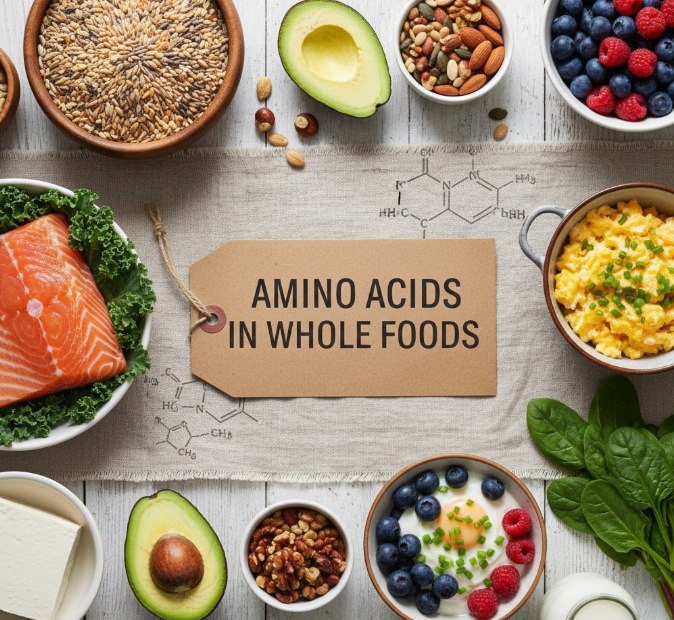
Special Considerations for Different Diets
Among the styles of eating, various approaches to amino acid optimization are needed.
Vegetarian Diets
Vegetarians that consume eggs and milk have an easy time obtaining complete proteins. Pay attention to the regular intake of these foods and the inclusion of plant sources of protein such as legumes, nuts, and whole grains.
Vegan Diets
Vegans should be more conscious of amino acids. Eat various sources of protein each day: soy products, quinoa, hemp seeds and complementary foods such as beans with rice. Another excellent choice is nutritional yeast that is a source of protein and B vitamins.
Athletes and Active People
Increased activity requires increased protein intake. Protein should be sought in every meal and a snack rich in protein should be taken by athletes after training. According to the National Institutes of Health, both animal and plant sources are effective with proper amounts of consumption.
Common Myths Regarding Amino Acids and Protein
Let us dispel certain popular misunderstandings.
Myth: Each meal must contain complete proteins.
Fact: All day your body accumulates amino acids. Everything you need is eating diverse proteins since 24 hours are enough.
Myth: Animal proteins are superior to plant proteins.
Fact: Although individual plant proteins may be incomplete, a combination of them or consumption of complete plant proteins such as quinoa and soy can supply all the essential amino acids efficiently.
Myth: There is no excess protein.
Reality: You can only absorb a certain amount of protein in your body. The surplus of amino acids is turned into glucose or fat. Moderation is better than excess.
Myth: You require supplements in order to acquire adequate amino acids.
Fact: Whole foods are a good source of amino acids to the majority of the population. Unless you have some special medical needs or have severe dietary limitations, supplements are hardly ever necessary.
Frequently Asked Questions
Which foods contain the highest amount of amino acids?
Animal products such as chicken, fish, eggs, and dairy products normally contain the highest amino acid per serving. Soybeans, quinoa and hemp seeds are the topmost plant foods that contain complete amino acid profiles.
Can plants supply all the essential amino acids?
Yes, absolutely! Plants contain all the essential amino acids and can be used to eat complete plant proteins, such as quinoa and soy, or to eat incomplete proteins, such as rice, in combination with beans throughout the day.
What will happen when you do not get enough amino acids?
Without sufficient amino acids you may lose muscle mass, have low immunity, slow healing of wounds, feel tired, have mood swings and lack concentration. The lack of it may lead to critical health issues.
Are amino acid supplements better than whole foods?
No, whole foods tend to be superior. They contain amino acids and other compounds, such as vitamins, minerals, fiber, and others, which act in combination. Supplements are lacking such nutritional complexity and might be unnecessarily costly.
What is the rate at which your body absorbs amino acids from food?
It takes 15-30 minutes after you eat and your body starts breaking down the protein and absorbing amino acids. The various proteins in foods digest at varying speeds: fastest is whey, slowest is casein and those of plant foods are in between.
Are there fewer amino acids in cooked foods as compared to raw foods?
Some amino acids are made more readily accessible to your organism through cooking due to breaking down protein structures. Nevertheless, some of the amino acids can be destroyed by too much heat. Most protein foods should be cooked in moderation.
Make the Amino Acids Work to Your Good
Amino acids do not need much effort to be obtained from whole foods. Take time to eat different sources of proteins in your day. Add animal choices or add careful combination of plant choices in case you are a meat eater or a vegetarian and vegan.
It is important to remember that whole foods do not only provide amino acids. They offer extensive nutrition packages that cannot be matched by supplements alone. Real eggs beat egg white protein powder. Real chicken outshines processed chicken protein products.
Your body has been designed to eat whole foods and it functions optimally when receiving nutrients in their natural condition. These foods have a package of amino acids that are already combined with what your body requires to utilize them.
Begin to monitor protein at every meal. Pay attention to the way you feel after you consume balanced meals containing good sources of protein. A majority of individuals have been found to experience more energy, increase in concentration, and satisfaction with their meals when they emphasize amino acid-rich whole foods.
The solution to optimal nutrition of amino acids is simple: consume real food, fill it with protein sources that you like, diversify your options, and your body will receive all required information to grow, mend, and prosper.