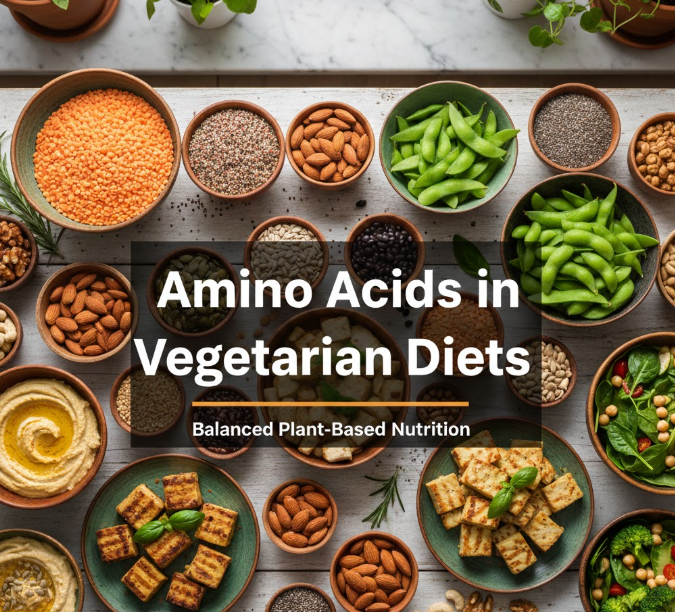
When it comes to nutrition, amino acids are the building blocks of life. They are essential for building proteins, repairing tissues, supporting enzymes, hormones, and much more. For vegetarians, understanding amino acids is crucial because plant-based diets can sometimes lack certain essential amino acids if not properly planned. But don’t worry—vegetarian diets can absolutely provide all the amino acids your body needs, you just need to know which foods to include. 🌱
What Are Amino Acids?
Amino acids are small molecules that combine to form proteins. Think of them as tiny LEGO pieces that, when connected, create the protein structures your body needs. There are 20 amino acids in total, and 9 of them are considered essential, meaning your body cannot make them and you must get them from your diet. The remaining 11 are non-essential because your body can produce them.
Essential Amino Acids in Vegetarian Diets
For vegetarians, it’s important to consume foods that provide all essential amino acids. The 9 essential amino acids are:
-
Histidine
-
Isoleucine
-
Leucine
-
Lysine
-
Methionine
-
Phenylalanine
-
Threonine
-
Tryptophan
-
Valine
Some plant foods contain all these essential amino acids (complete proteins), while others may lack one or two (incomplete proteins).
Complete Plant-Based Proteins
Certain vegetarian foods naturally have all essential amino acids in sufficient amounts. These include:
| Food | Protein per 100g | Notes |
|---|---|---|
| Quinoa | 14g | Great source of lysine, which is low in most grains |
| Soy products (tofu, tempeh, edamame) | 8-19g | Complete protein, very versatile |
| Buckwheat | 13g | Gluten-free and complete |
| Chia seeds | 16g | Rich in omega-3 and fiber |
| Amaranth | 14g | Ancient grain with high protein content |
💡 Fun tip: Mixing grains and legumes in your meals, like rice with beans, can also give you a complete protein profile without relying on processed foods.
Incomplete Plant Proteins and How to Combine Them
Many vegetables, nuts, and grains are incomplete proteins, which means they may lack one or more essential amino acids. But here’s the good news: by combining different plant foods throughout the day, you can meet your body’s amino acid needs.
| Incomplete Protein | Complementary Food | Amino Acid Boosted |
|---|---|---|
| Rice | Lentils | Lysine |
| Peanut butter | Whole wheat bread | Lysine |
| Corn | Beans | Lysine |
| Hummus (chickpeas) | Pita bread | Methionine |
The key is variety, not perfection in every meal. Your body can combine amino acids from different meals, so you don’t need to stress about eating every essential amino acid at every single meal. 🌟
Benefits of Amino Acids in Vegetarian Diets
Including a variety of amino acids in vegetarian diets provides many health benefits:
-
Muscle growth and repair: Amino acids, especially leucine, help build and repair muscles. Great for athletes and active individuals. 💪
-
Immune system support: Certain amino acids like arginine and glutamine support immunity.
-
Brain health: Tryptophan is a precursor to serotonin, which helps regulate mood and sleep.
-
Hormone production: Amino acids help produce hormones like insulin, growth hormone, and thyroid hormones.
-
Weight management: Protein-rich plant foods keep you full for longer, reducing overeating.
Top Vegetarian Sources of Amino Acids
| Food Group | Examples | Amino Acid Highlights |
|---|---|---|
| Legumes | Lentils, chickpeas, black beans | High in lysine, leucine, isoleucine |
| Nuts & Seeds | Almonds, pumpkin seeds, chia seeds | Methionine, arginine, tryptophan |
| Grains | Quinoa, brown rice, oats | Methionine, leucine |
| Soy Products | Tofu, tempeh, soy milk | Complete proteins, high in all essential amino acids |
| Vegetables | Spinach, broccoli, peas | Moderate protein, lysine-rich |
Tips for Vegetarians to Get All Amino Acids
-
Eat a variety: Mix grains, legumes, nuts, seeds, and vegetables daily.
-
Focus on high-lysine foods: Legumes are key because grains are often low in lysine.
-
Include soy products: Tofu, tempeh, and edamame are complete proteins.
-
Try quinoa and amaranth: Ancient grains that are naturally complete.
-
Snack smart: Nuts and seeds add extra amino acids between meals.
-
Consider fortified foods or supplements: If you struggle to meet protein needs, plant-based protein powders can help.
Common Myths About Amino Acids in Vegetarian Diets
-
Myth 1: Vegetarians can’t get enough protein. ❌
Reality: With proper planning, vegetarian diets can provide more than enough protein and amino acids. -
Myth 2: You must combine foods at every meal. ❌
Reality: Your body can combine amino acids from meals over the entire day. -
Myth 3: Plant proteins are inferior. ❌
Reality: Plant proteins offer all essential amino acids when eaten in variety. Plus, they bring fiber, antioxidants, and vitamins.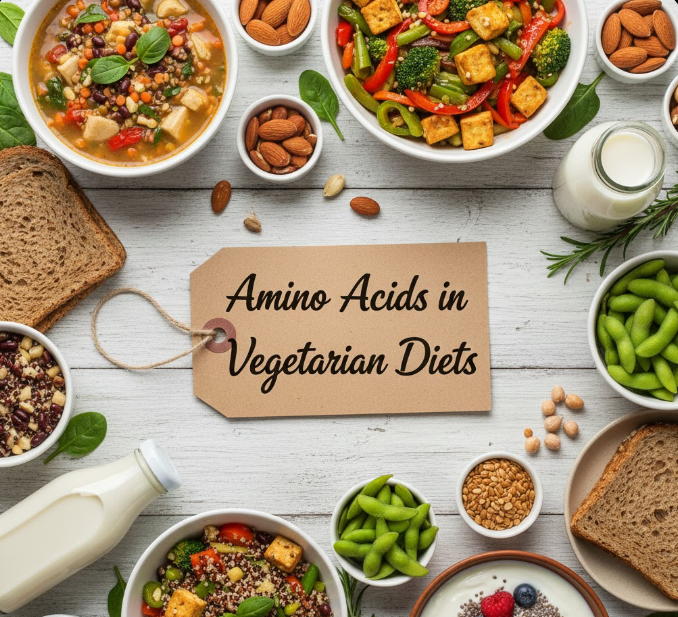
FAQs
Q: Can vegetarians get all essential amino acids without soy?
A: Yes! By combining beans, lentils, grains, seeds, and nuts, you can meet all essential amino acids without relying on soy.
Q: Is quinoa really a complete protein?
A: Absolutely. Quinoa contains all nine essential amino acids, making it a great staple for vegetarians.
Q: How much protein should vegetarians eat?
A: On average, adults need about 0.8g of protein per kg of body weight daily. Active people may need more (1.2–2.0g/kg).
Q: Are amino acid supplements necessary for vegetarians?
A: Not usually. Whole foods provide all the amino acids you need. Supplements can be used if protein intake is low.
Q: What are some high-protein vegetarian snacks?
A: Roasted chickpeas, edamame, trail mix with nuts and seeds, peanut butter on whole-grain toast, and Greek yogurt (if lacto-vegetarian).
Conclusion
Amino acids are essential for life, and vegetarian diets can provide them all with smart planning. The key is diversity and balance. By including legumes, grains, nuts, seeds, and vegetables, you can enjoy a healthy, protein-rich diet without missing any essential nutrients. 🌿
Remember, vegetarian eating is not just healthy—it can be delicious, satisfying, and complete. Whether you’re cooking lentils with rice, snacking on almonds, or enjoying a tofu stir-fry, you’re giving your body the amino acids it needs to thrive. 🥗