Glutamine is one of those health words you may have seen on supplement bottles, fitness blogs, or hospital nutrition charts. It sounds scientific, maybe even confusing. But in reality, glutamine is very simple. It is an amino acid that your body already makes and uses every single day. You don’t need to be a doctor or gym expert to understand it. Let’s break it down slowly, in very easy English, like a real human would explain it to another human 😊
What glutamine really is (no complex science)
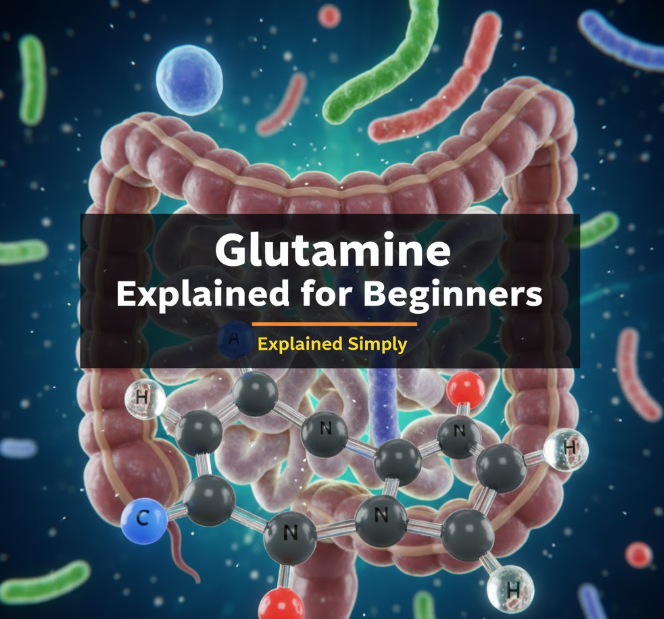
Glutamine is an amino acid. Amino acids are small building blocks that help your body make protein. Protein is needed for muscles, skin, blood, organs, and even hormones. Among all amino acids, glutamine is the most abundant one in your body. That simply means you have more glutamine than most others.
Your body makes glutamine naturally, especially in your muscles. It then sends glutamine to places where it is needed, like your gut, immune system, and brain. So yes, your body already knows how important it is.
Think of glutamine as a helper molecule. It does not steal the spotlight, but without it, many things stop working properly.
Why beginners hear about glutamine so often
Many beginners hear about glutamine because it is linked to muscle recovery, digestion, and immunity. Athletes talk about it. Doctors use it in hospitals. People with gut problems read about it online. That’s why it pops up everywhere.
But here’s the thing most articles don’t say clearly: glutamine is not magic. It works quietly. Slowly. In the background. And that’s actually a good thing 👍
Essential vs conditionally essential (easy explanation)
Some amino acids must come from food. These are called essential. Others can be made by the body.
Glutamine is called conditionally essential. This means:
- Normally, your body makes enough glutamine.
- But during stress, illness, injury, heavy exercise, or surgery, your body may need more than it can make.
That’s when food or supplements become helpful.
What glutamine does inside your body
Glutamine has many small jobs. Alone, they don’t sound huge. Together, they matter a lot.
Here are its main roles, explained simply:
• It fuels your gut cells
• It supports your immune system
• It helps muscles recover
• It carries nitrogen between tissues
• It helps balance acid levels
• It supports brain function indirectly
Let’s talk about these one by one, in a very human way.
Glutamine and gut health (very important)
Your intestines are lined with tiny cells that need fuel. Their favorite fuel is glutamine. Not sugar. Not fat. Glutamine.
When you don’t have enough glutamine:
- Digestion may feel weak
- Gut lining may become irritated
- Nutrients may not absorb well
This is why glutamine is often mentioned for people with bloating, leaky gut, diarrhea, or IBS-like symptoms.
Doctors even give glutamine to hospital patients to protect the gut. That alone tells you it’s important.
Glutamine and the immune system
Your immune cells use glutamine as energy. When you are sick, injured, or stressed, your immune system burns through glutamine very fast.
Low glutamine can mean:
- Slower recovery
- More infections
- Feeling weak for longer
This is why glutamine is sometimes used during illness or after surgery. It helps immune cells stay strong 💪
Glutamine and muscle recovery
Muscles store most of the body’s glutamine. During intense exercise, glutamine levels can drop.
This may lead to:
- Muscle soreness
- Longer recovery time
- Feeling drained
Glutamine does not directly build muscle like protein or leucine. But it helps muscles recover and protects them from breakdown. Think of it as muscle protection, not muscle growth.
Glutamine and stress (mental + physical)
Stress is not only emotional. Lack of sleep, exams, workouts, illness, and even fasting are stress for the body.
During stress:
- Glutamine is used faster
- Muscles release more glutamine
- The body may struggle to keep balance
This is why people under long-term stress sometimes benefit from glutamine support.
Natural food sources of glutamine
You don’t need supplements right away. Many foods already contain glutamine.
Here are common food sources:
| Food | Glutamine Level |
|---|---|
| Eggs | High |
| Chicken | High |
| Beef | High |
| Fish | Medium |
| Milk & yogurt | Medium |
| Beans | Medium |
| Spinach | Medium |
| Cabbage | Medium |
A balanced diet already gives you a good amount. Supplements are usually for special needs, not everyone.
Glutamine supplements (simple explanation)
Glutamine supplements usually come as powder or capsules. The powder is more common and easy to mix with water.
People take glutamine for:
- Gut health
- Recovery after workouts
- During illness
- After surgery
- Heavy training periods
It has a mild taste and is usually easy on the stomach.
Is glutamine safe for beginners?
For most healthy people, glutamine is considered safe when used properly. It is already present in your body.
However:
- Too much is not better
- People with kidney or liver disease should ask a doctor
- Pregnant or breastfeeding women should be careful
As with anything, balance matters ⚖️
Common beginner mistakes about glutamine
Many beginners misunderstand glutamine. Let’s clear that up.
• It is not a steroid
• It is not a fat burner
• It does not replace protein
• It is not an instant muscle builder
It works slowly and supports systems, not quick results.
How glutamine feels (realistic expectations)
This part is very honest.
You may NOT feel:
- Instant energy
- Sudden strength
- Immediate changes
You MAY notice:
- Better digestion
- Less soreness
- Faster recovery
- Fewer stomach issues
It’s subtle. And that’s okay.
Glutamine vs other amino acids (simple table)
| Amino Acid | Main Role |
|---|---|
| Glutamine | Gut + immune support |
| Leucine | Muscle growth trigger |
| Arginine | Blood flow |
| Glycine | Calm + sleep |
| BCAAs | Muscle energy |
Each amino acid has its own job. Glutamine’s job is support and protection.
Who may benefit most from glutamine
Glutamine is not for everyone, but it helps certain people more.
You may benefit if you:
- Have gut problems
- Train very hard
- Get sick often
- Are recovering from illness
- Feel run down or stressed
If you are already healthy and eating well, you may not notice a big difference.
How glutamine fits into daily life
Glutamine is not dramatic. It fits quietly into routines.
Some people mix it with water in the morning.
Some take it after workouts.
Some use it during recovery periods.
No hype. Just support 🙂
Myths about glutamine (quick reality check)
Let’s break some myths.
❌ “Glutamine builds huge muscles”
✅ It supports recovery, not size
❌ “Everyone needs supplements”
✅ Food is enough for many
❌ “More is always better”
✅ Balance is better
Why glutamine matters even if you don’t feel it
Many important things in the body work silently. You don’t feel your liver working. You don’t feel your cells repairing. But they matter.
Glutamine is like that. It helps things work smoothly behind the scenes.
FAQs about glutamine
Is glutamine only for athletes?
No. Athletes use it, but many non-athletes use it for gut and immune health.
Can I get enough glutamine from food?
Yes, most healthy people can. Supplements are for extra needs.
Does glutamine help digestion?
Yes, it fuels gut lining cells and may support digestive comfort.
Is glutamine safe long-term?
For most healthy people, yes, when used responsibly.
Will glutamine help me gain muscle?
It helps recovery, not direct muscle growth.
Final thoughts (honest and simple)
Glutamine is not flashy. It doesn’t promise overnight changes. And that’s exactly why it’s trusted in medical and fitness fields.
It supports your gut.
It supports your immune system.
It helps recovery when life gets stressful.
For beginners, understanding glutamine is about understanding balance. Your body already uses it wisely. Sometimes, it just needs a little extra help 🤍