What are Amino Acids and Why Should You Care?
Whenever you take a bite of chicken, open an egg or heap some beans on your plate, you are feeding your body something unbelievable: amino acids. These are the little molecules that comprise proteins and it is proteins that ensure that your body is running smoothly day by day.
Visualize the amino acids as LEGO blocks. Same as when using LEGO pieces you can construct a thousand different structures, so can your body use amino acids to assemble proteins in as many different ways as it requires. These proteins are involved in all activities such as formation of muscles, resistance of infections and transportation of oxygen in your blood.
There are 20 amino acids that are required by your body. Others of these your body can produce itself but some have to be found in the food you consume. Nutrition is one of them. Adequate intake of the appropriate amino acids into your daily food does not only matter but is absolutely essential to staying healthier, developing well, and feeling your best.
Amino acids are substances commonly recognized as the building blocks of proteins. Proteins are made up of amino acids, which are usually known as the building blocks.
Types of Amino Acids: Not All Are Created Equal
Amino acids are not made equal. Depending on their origin and the way your body uses them, scientists classify three major groups of them.
The Must-Haves: Essential Amino Acids from Food
The nine amino acids that your body is not in a position to synthesize are called the essential amino acids. You must get them from food. These are histidine, isoleucine, leucine, lysine, methionine, phenylalanine, threonine, tryptophan and valine.
The absence of any of these essential amino acids may lead to troubles. All the nine are important to your body because they together form complete proteins. That is why it is so important to have a diverse diet.
The Non-Essential Amino Acids: These Are Produced by Your Body
The idea of non-essential makes one think that these amino acids are not important, which is false. They are very necessary to your well-being. It is just the name of the fact that your body can produce them out of the other nutrients.
These are aspartic acid, asparagine and alanine. These are generated by your body naturally provided that you are taking enough total protein and calories.
Conditionally Essential Amino Acids: Sometimes You Have to Have More
These amino acids lie between these. The amount you normally require is produced by your body, but when you are under stress, sick or growing at a faster rate, you may require more of those in food form.
This can be examples such as arginine, cysteine, glutamine, glycine, proline, serine and tyrosine. These amino acids are usually required in large quantities by athletes, sick people, and the growing teenagers.
The Power of Amino Acids in Your Body Every Day
The amino acids do not sit around in the body. They are always busy at keeping you alive and prosperous. This is how they treat you all the night and all the day.
Building and Repairing Muscles
Your muscles are straining every time you move, play sports or even go to school. Amino acids help in mending the minute tears that occur in the muscle fibers when one is engaged in a certain activity. They also aid in the development of new muscle tissue in case you exercise regularly.
One of the essential amino acids like leucine is especially effective in muscle building. It sends a message to your body to begin the synthesis of new muscle proteins following exercise.
Supporting Your Immune System
Each person needs to maintain a robust immune system to prevent falling sickly, which is best achieved through proper nutrition and avoiding immunosuppressing factors.
What happens is that when germs attack your body, your immune system takes over. The amino acids assist in the production of antibodies, which are special proteins that attack bacteria and viruses. Your immune system will fail to work properly without the sufficient amount of amino acids, and you will end up being more prone to becoming ill.
Glutamine is a conditionally essential amino acid and it is particularly necessary in the immune cells. When a person falls sick, glutamine is consumed at a significantly elevated rate compared to the usual rates.
Making Hormones and Brain Chemicals
Many hormones are made of amino acids and they control your body. As an example, the amino acid tryptophan assists in making serotonin, which is a brain substance that influences your mood and sleeping behavior. That is why sometimes consuming food containing tryptophan makes you feel better and sleep more.
Tyrosine is used in the manufacture of dopamine and norepinephrine that influence alertness, motivation, and focus. It is easy to find that the more students eat protein-rich food before studying, the more they are likely to be more focused.
Transporting and Storing Nutrients
Your blood has special proteins which transport nutrients in your body. The oxygen in your lungs is carried to all your cells by hemoglobin which is composed of amino acids. The other proteins assist in the transportation of vitamins, minerals and fats where they are required.
In the event that you are eating well, but you lack proper amino acids, your body is not able to allocate the nutrients in your food.
The Difference Between Complete and Incomplete Proteins
Knowing the quality of proteins aids you to have better plans in the foods and snacks you will have throughout the day.
Complete Proteins Have the Full Nine Essential Amino Acids
Complete proteins are made of all the nine essential amino acids and are in quantities that will be utilized efficiently by your body. Animal foods are complete proteins. This consists of meat, poultry, fish, eggs, milk, cheese and yogurt.
Consumption of complete proteins is also helpful in satisfying your amino acid requirements since it is contained in a single package. One cup of Greek yogurt or a chicken breast provides your body with the entire set of building blocks it needs.
Incomplete Proteins Lack Some Amino Acids
Incomplete proteins are found in the majority of plant foods. They possess a few of the essential amino acids but are deficient in others. Grains may be low in lysine, whereas beans may be low in methionine.
That does not imply that plant proteins are bad. It simply implies that you have to consume a range of vegetable foods during the day in order to obtain all the amino acids that you require.
Complementary Combinations: Combining Foods Forms Complete Proteins
The positive thing is that you may mix various incomplete proteins in order to construct a complete protein profile. This is done naturally in the traditional food pairings around the world.
The combination of rice and beans gives all the necessary amino acids. Whole wheat bread with peanut butter forms a complete protein. It works exactly the same with hummus and pita bread. Amino acids in various foods consumed throughout the day can be used by your body, thus there is no need of them being consumed at the same time.
Best Food Sources for Acquiring Your Daily Amino Acids
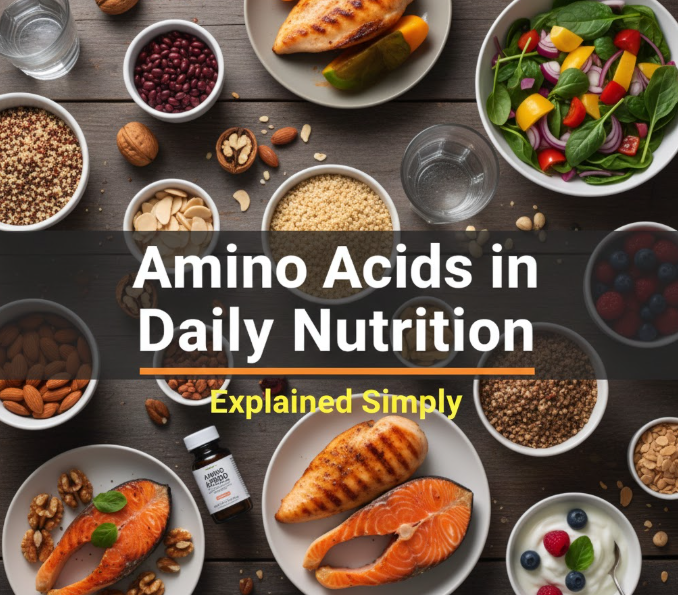
Eating these foods will fill your plate and will provide you with adequate amino acids per day.
Animal Sources: Protein Powerhouses
Chicken and Turkey: 3 oz. of chicken breast has approximately 27g of complete protein. It is lean, multi-purpose and loaded with all the necessary amino acids.
Fish and Seafood: Salmon, tuna, shrimp and other seafood contain great sources of protein along with healthy omega-3 fats. The approximate protein content of a salmon fillet is 40 grams of high-quality protein.
Eggs: 1 large egg has 6g complete protein with all the essential amino acids. Almost half of the protein and valuable vitamins is included in the yolk.
Dairy Products: Milk, cheese and yogurt are complete proteins. Greek yogurt is specifically high in protein with an estimated 15-20 grams per cup.
Beef and Pork: Red meat contains all the protein, as well as iron and vitamin B12. Lean beef, taken in 3 ounces, has approximately 25 grams of protein.
Plant-Based Protein Sources
Quinoa: This is a grain-like seed, one of the few plant foods which are complete protein foods. Cooked quinoa contains 8 grams of protein in one cup.
Soybeans and Soy Products: Tofu, tempeh and edamame are complete plant proteins. 10 grams of protein are found in half a cup of tofu.
Lentils and Beans: Legumes are power-packed sources of protein but they are not complete. A single cup of cooked lentils provides 18 grams of protein.
Nuts and Seeds: Almonds, peanuts, chia seeds and hemp seeds are good sources of protein. A 7-gram amount is obtained by two tablespoons of peanut butter.
Whole Grains: Brown rice, oats and whole wheat have moderate levels of protein. A one-cup meal of cooked oatmeal contains approximately 6 grams of protein.
How Much Amino Acids and Protein Do You Really Need?
The quantity of protein required depends on the size, age, level of activity and the health condition.
General Guidelines for Various Ages
The protein requirement of children between 4-8 years is approximately 19 grams per day. Children between 9 and 13 years old should have about 34 grams. Teenagers require more: boys of 14-18 years must consume 52 grams daily and girls of the same age must consume 46 grams daily.
The amount of protein that adults need on an average basis is usually 0.8 grams per kilogram. That amounts to approximately 55 grams of protein per day for a 150 pound individual.
Athletes and Active Individuals Require More
You must have additional protein in case you are playing a sport or doing intense exercises. Athletes and active teenagers may require 1.2-2.0 grams per kilogram of body weight.
This aids in muscle repair following training as well as muscle growth. An athlete can require 150 grams of protein per day.
Special Conditions That Add to the Needs
During pregnancy, women require more protein to nourish their developing baby. Elderly people require a greater amount of protein to avoid muscle wasting. Individuals who are healing after an injury or surgery need additional protein to heal.
Vegetarians and vegans may require a little more total protein because the plant proteins are not so well utilized by the body in some cases.
Planning Balanced Nutrition with Amino Acids in Mind
You do not need to complicate planning your meals to make sure that they contain all your essential amino acids.
Sample Daily Meal Plans
Omnivore Meal Plan:
- Breakfast: Scrambled eggs with whole wheat toast and orange juice.
- Snack: Greek yogurt and berries.
- Lunch: Turkey sandwich with tomato and lettuce on whole grain bread.
- Snack: Apple slices with peanut butter.
- Dinner: Grilled salmon, brown rice, and steamed broccoli.
This plan offers several sources of complete proteins in the course of day, which satisfy the need of amino acids easily.
Vegetarian Meal Plan:
- Breakfast: Oatmeal with chunks of almonds and banana slices.
- Snack: String cheese and whole grain crackers.
- Lunch: Bean and cheese burrito with salsa and avocado.
- Snack: Hummus and carrot sticks.
- Dinner: Stir-fried tofu with quinoa and mixed vegetables.
This vegetarian diet is a mix of various protein foods in order to cover all the essential amino acids.
Vegan Meal Plan:
- Breakfast: Smoothie with peanut butter, spinach, banana and soy milk.
- Snack: Trail mix with nuts and dried fruit.
- Lunch: Lentil soup with whole wheat roll.
- Snack: Edamame pods.
- Dinner: Quinoa and black bean bowl with roasted vegetables.
The vegan diet incorporates complementary proteins in the daytime to ensure a full coverage of amino acids.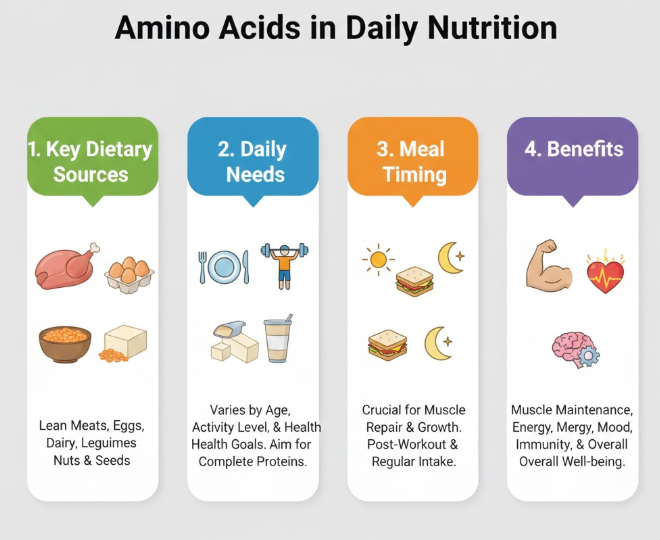
Symptoms of Possible Insufficient Intake of Amino Acids
There are definite indications that your body is not getting sufficient amino acids.
Physical Warning Signs
Recurring sickness indicates that your immune system is not receiving its share of the amino acids. Protein deficiency is also exhibited by slow wound healing. Weakness or loss of muscle that may not be a result of dieting may be an indication of insufficient protein supplementation.
Lack of proper levels of amino acids frequently causes loss of hair, splitting nails, and skin that is dry. When there is a lack of protein, your body gives priority to vitally important organs rather than hair and nails.
Signs of Mental and Emotional Instability
Amino acid deficiency may be the cause of difficulty in concentrating and brain fog. Given that neurotransmitters necessitate the presence of a certain number of amino acids, low consumption has an impact on mood and clarity of mind.
Experiences of abnormally fatigable or weak even after getting sufficient sleep may be a sign of protein issues. The amino acids aid in energy production and give one stamina to stay all day long.
When to Visit a Healthcare Provider
In case of numerous warning signs, consult a doctor or registered dietitian. They are able to gauge your diet and conduct blood tests to determine the level of protein. You can fix shortcomings through professional advice in a safe and effective manner.
Common Myths Concerning Amino Acids and Protein
Now, some common misunderstandings concerning the nutrition of amino acids.
Myth: You Have to Use Protein Supplements to Get Bigger
Reality: The general population is capable of covering their amino acid requirements by means of normal food. There is no need to use supplements; this is in case you have certain dietary limitations or extremely high protein needs. Whole foods also contain amino acids and other essential nutrients which are missing in supplements.
Myth: Animal Proteins Are Better Than Plant Proteins
Reality: Although the majority of plant proteins are non-complete, mixing various plant foods in the course of the day gives all the important amino acids. Plant-based diets are very successful with many athletes and bodybuilders.
Myth: More Protein, the Better
Reality: There is only a limit to the amount of protein that your body can take at a given time. Consuming too much does not necessarily add more muscle or make one healthier. It is the matter of balance rather than quantity.
Myth: You Have to Consume Protein Right After a Workout
Reality: Post-workout protein is beneficial to recovery, but the time period is broader than initially believed. Consumption of protein a few hours after exercise is beneficial.
Frequently Asked Questions Concerning Amino Acids in Nutrition
Is it possible to get adequate amino acids on a vegetarian or vegan diet?
Absolutely. When you eat a wide variety of foodstuffs during the day, plant-based diets can supply all the essential amino acids. Foods that are eaten in combination such as beans and rice, or peanut butter and bread are complete proteins. Quinoa and soy products are naturally complete plant proteins.
Is there any difference in amino acids required by children and adults?
Children require the same amino acids as adults but histidine is particularly important at growth stages. Growing children also require more protein with regard to body weight in comparison to adults. The protein amount required by children is approximately 1.0-1.5 grams per kilogram of body mass on a daily basis.
Are you able to eat excessive amino acids or consume excess protein?
Yes. Very high protein diet levels may strain the kidneys in the long run and cause dehydration. Majority of healthy individuals will be able to consume 2-3 times the advised protein quantities safely though nothing more is beneficial. Eat protein and carbohydrates and healthy fats in moderation.
Are amino acid supplements preferable to those found in food?
Usually, no. Whole foods contain amino acids and vitamins, minerals, fiber and other useful substances. Food supplies amino acids which are efficiently absorbed and used by your body. There are cases where supplements may be beneficial, such as when the needs of athletes are very high, or when one has absorption issues.
What is the time of recovery of an amino acid deficiency?
This is based on the extent of the deficiency. Mild deficiencies should ameliorate in a couple of weeks of consuming sufficient protein. More serious shortcomings may require a number of months before they are fixed completely. Having a healthcare professional as your guide is the best way to go.
Do amino acids contribute to weight loss?
Foods rich in proteins with amino acids make you fuller and therefore this can aid in losing weight. In weight loss, amino acids are also useful in maintaining the muscle mass. Nevertheless, amino acids do not actually burn fat or make one lose weight.
Using Amino Acids to Achieve Your Health Objectives
By knowing the amino acids you are now equipped with the ability to make more nutritional decisions on a daily basis. Regardless of whether you are a meat or plant-based eater, it should be on the agenda to have enough high-quality protein.
Begin by adding a source of protein to every meal. Make sure to have a mixture of foods so that you can have all the necessary amino acids. Be conscious of your condition—when you have more energy, the ability to recover more after exercise, and you have fewer sick days, then you are probably getting enough amino acids.
Your body has a constant cycle of breaking down and rebuilding itself with the help of amino acids in your diet. Provide it with the building blocks by consuming balanced diets which contain sufficient amounts of protein. Your muscles, immune system, brain and all the cells in your body will love you because of it.
It is worth remembering that nutrition is not about perfection. It is about carrying out consistent and good decisions the majority of the time. Pay attention to the quality of the protein sources in your day, make your food colorful, and follow the cues of your body. These basic tips will automatically create the amino acids which your body requires to keep you healthy, strong and prosperous.