Introduction
Have you always questioned yourself why your body becomes taller and stronger? The solution is contained in minute building blocks termed as amino acids. These are powerful nutrients that operate behind the scenes on a daily basis to make sure that you grow, heal and remain healthy.
Proteins are made up of amino acids and your body requires them in nearly everything. These amazing compounds are essential in the development of humans whether it is in muscle building or building of hormones. Growth just cannot occur without them.
You will find out, in this article, how amino acids aid growth at all levels of life. You will know which foods have them, which are more important than others and how to ensure you are getting enough. You are either an inquisitive person or maybe just growing up as a teenager or you are a parent, but in any case, you will have the knowledge you need as a result of reading this guide.
Let us consider the interesting world of amino acids and their magic effect on growth.
What Are Amino Acids and Why Are They Important?
Amino acids are organic compounds which are joined together to form proteins. Consider them as portions of an alphabet. The same way that letters come together to form words, the same happens to amino acids to form various proteins that your body requires.
Thousands of proteins are contained in your body. Each one has a specific job. Your muscles are composed of some proteins. Your hair and nails are comprised of others. Otherwise some of them act as food-digesting enzymes. Others are messengers which transmit signals all over your body.
Your body uses 20 types of amino acids. Nine of them are referred to as essential amino acids since your body is not able to synthesize them. You must get these from food. The remaining 11 are considered to be non-essential since they can be synthesized by other compounds by your body.
The Essential Nine
The nine required amino acids are:
- Histidine
- Isoleucine
- Leucine
- Lysine
- Methionine
- Phenylalanine
- Threonine
- Tryptophan
- Valine
All these have different functions in the growth and development. The absence of either of them can impair the processes of growth.
The Role of Amino Acids in Physical Development
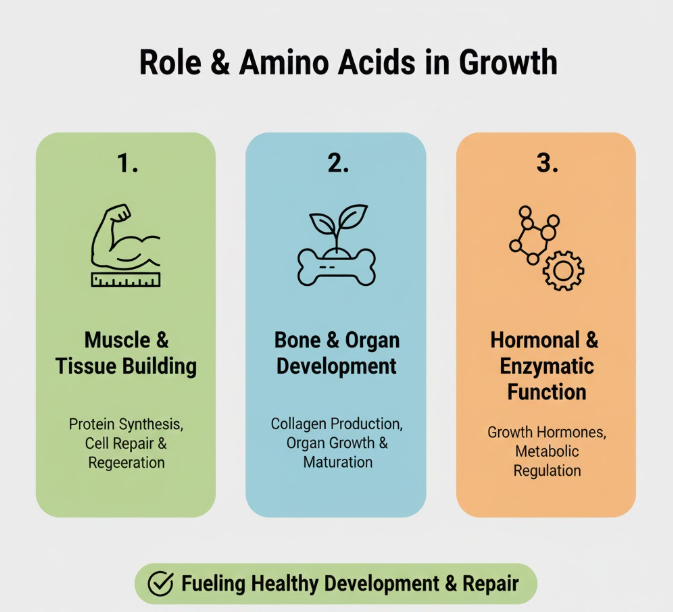
Amino acids are important to physical growth in various aspects. These substances are the raw material when it comes to the construction of new tissues and cells.
Building Muscle Tissue
Protein is nearly composed completely of the muscles. As you work out or just get through your day, minute tears are created in muscle fibers. These tears are repaired by your body with amino acids which make the muscles a little bigger and stronger.
Protein growth is also specifically susceptible to three amino acids, namely: leucine, isoleucine, and valine. Collectively, they are referred to as branched-chain amino acids or BCAAs. These three constitute approximately 35 percent of what is known as the protein in your muscles.
Leucine is the superstar. It stimulates a mechanism known as muscle protein synthesis which is simply the process by which your body builds new muscle tissue. In the absence of sufficient leucine muscle development becomes minimal.
Supporting Bone Development
Calcium is not the only thing needed to make the bones strong. Proteins, which consist of amino acids are also needed by them. The most common protein in bones is collagen which provides the bones with elasticity and form.
Two amino acids are glycine and proline which are the backbone of collagen. The other important amino acid in the health of bones is lysine. It assists your body to absorb calcium and collagen fibers.
Teenagers and children require sufficient amino acids in order to grow to their full height capacity. Research indicates that protein deficiency in childhood may result in retarded growth that may not recover completely.
Promoting Height Increase
Being made taller does not only mean that the bones lengthen. At the ends of bones, there are growth plates which require use of amino acids to work well. It is cartilage cells that grow and eventually transform to bone tissue that are found in these plates.
Human growth hormone (HGH) is the growth hormone that is also reliant on amino acids. Arginine and glutamine may trigger HGH secretion particularly at time of sleep when the majority of growth occurs.
Amino Acids in Childhood and Adolescent Growth
The developing years require the additional care about the intake of the amino acids. Bodies develop quicker during the period of childhood and adolescence than at any other period in life other than infancy.
Critical Growth Periods
Between the ages of 0 to 2, the children develop at a very high pace. They require good quality of proteins in relation to their weight. These essential amino acids are in ideal proportions in breast milk or formula.
Another spurt of intense development is the teenage growth spurt. This happens to boys when they are between the ages 12-15 and to girls when they are between the ages of 10-13. In these years, the demand of amino acids rises tremendously.
Growth Hormone Production
The maximum levels of growth hormone occur in adolescence. This hormone instructs the bones to grow longer and muscles to enlarge. However, growth hormone is unable to act in the absence of sufficient amino acids.
Arginine is essential especially on the production of growth hormone. Studies reveal that children can be placed on arginine supplements to raise the level of growth hormone but whole food sources are usually preferred.
Tryptophan influences growth in an indirect manner as it assists in the production of serotonin that controls sleep. As growth hormone is secreted when one is in deep sleep, an adequate amount of tryptophan facilitates the whole process of growth.
Amino Acids to Build and Repair Muscle
Whenever you are an athlete or even just someone who lives his/her daily life, the muscles are breaking down and building up. A constant inflow of amino acids is necessary in this process.
The Repair Process
During muscle activity, particularly exercise, there is microscopic damage of muscle fibers. This may seem detestable, yet that is how muscles become stronger. This damage is repaired by your body with the help of amino acids forming a little more muscle tissue than previous.
This is a repair process that occurs mostly when one is resting, particularly during sleep. This is why it is so important to have sufficient protein during the day. Amino acids have to be continuously supplied to your body to ensure that repairs continue to take place.
Preventing Muscle Loss
It is harder as individuals grow older to stay in shape with muscle. Decades after 30 years of age, adults naturally lose 3-5 percent of muscle mass. This accelerates past 60 years.
This loss can be slowed down by appropriate intake of amino acids. Leucine once again takes a leading role. Leucine is required in higher amounts by older individuals to initiate muscle protein synthesis compared to other young individuals.
Recovery After Exercise
Extra amino acids are required by athletes and active individuals to enable them to rest following workouts. Vigorous training enhances muscle catabolism. Protein intake following exercise gives the amino acid required to restore and build tougher muscle tissue.
The timing matters too. Studies indicate that the best way of maximizing muscle recovery and growth is to eat protein two hours after exercise.
Sources of Foods High in Growth-Promoting Amino Acids
Eating the right foods will be the beginning of getting enough amino acids. There are those foods that contain all the nine essential amino acids and those that contain some of them.
Complete Protein Sources
Complete proteins are those foods that do contain all nine essential amino acids. These include:
Animal Sources:
- Chicken breast
- Turkey
- Beef
- Pork
- Fish (salmon, tuna, cod)
- Eggs
- Milk
- Yogurt
- Cheese
Plant Sources:
- Quinoa
- Buckwheat
- Seitan (wheat protein)
- Soy products (tofu, tempeh, edamame)
- Hemp seeds
- Chia seeds
Incomplete Proteins
Most vegetable foods have a combination of some of the most important amino acids, but not all. It is referred to as incomplete proteins. Nevertheless, you are able to mix various incomplete proteins to achieve all the amino acids that you require.
Popular combinations are:
- Rice and beans
- Whole wheat bread with peanut butter
- Hummus with pita bread
- Lentil soup and whole grain crackers
Daily Protein Needs by Age
The following is a table of the recommended daily protein intake of various age groups:
| Age Group | Protein Required (per day) | Per Pound Body Weight |
|---|---|---|
| 1-3 years | 13 grams | 0.55 grams per pound |
| 4-8 years | 19 grams | 0.50 grams per pound |
| 9-13 years | 34 grams | 0.45 grams per pound |
| 14-18 years (boys) | 52 grams | 0.40 grams per pound |
| 14-18 years (girls) | 46 grams | 0.40 grams per pound |
| Adults | 46-56 grams | 0.36 grams per pound |
These are bare minimum requirements. Probably more is required by active people and athletes.
Special Amino Acids That Enhance Growth
Although every amino acid is important in growth, some are so effective that they deserve special consideration.
Leucine: The Growth Trigger
Leucine is the most significant amino acid in muscle growth. It triggers a protein named mTOR which initiates synthesis of muscle proteins.
High protein foods rich in leucine are:
- Chicken
- Beef
- Salmon
- Eggs
- Milk
- Soybeans
Arginine: The Height Helper
Arginine assists in the creation of growth hormone and enhances the circulation. The improved flow of blood implies that more nutrients get into growing bones and muscles.
Watermelon, pumpkin seeds, turkey and peanuts are great sources of arginine.
Lysine: The Bone Builder
Lysine aids in the absorption of calcium in your body and the development of collagen. Lack of adequate lysine causes bones to be weak and fragile.
Lysine is abundant in dairy products, eggs, chicken and lentils.
Glutamine: The Recovery Champion
Glutamine helps in building the immune system and accelerating post-exercise recovery. It preserves also the health of your intestines that absorb nutrients of food.
High levels of glutamine are found in beef, chicken, fish, eggs and cabbage.
Signs of Amino Acid Deficiency
Do you know whether you are getting the right amount of amino acids? When something is missing your body makes it clear.
Physical Warning Signs
- Slow wound healing
- Frequent illnesses
- Fatigue and low energy
- Muscle weakness
- Hair loss or brittle hair
- Fingernail ridges or spots
- Difficulty concentrating
Growth-Related Concerns
In children and adolescents, the amino acid deficiency may present itself in the form of:
- Slower than normal height increase
- Below-average weight for age
- Delayed puberty
- Poor muscle development
In case you observe these symptoms, consult a physician or dietician. The blood tests may show whether the protein consumption is sufficient.
How Your Body Processes Amino Acids for Growth
Consumption of protein is not all. It has to undergo breaking down into single amino acids by your body before it can be used to grow.
The Digestion Journey
When you consume protein it goes to your stomach. Protein bonds start to break there, in the stomach, through the help of acid and enzymes. The partially digested protein goes then to your small intestine.
Additional enzymes complete the breakdown of the proteins into amino acids in small intestine. These amino acids enter into your blood through the intestinal wall.
Distribution and Usage
Amino acids spread all over your body once in your blood. The needed amino acids are taken by the cells and are assembled to create new proteins.
Your liver is a control center, and it dictates the place of the amino acids. It is also able to change certain amino acids into other amino acid that your body requires.
The whole cycle of consumption of protein to new tissue requires a number of hours. That is why it is better to consume protein in small portions during the day rather than consume it in one portion.
Amino Acid Supplements: Do You Need Them?
You only need to enter any nutrition store and you will see shelves stacked with amino acid supplements. But do they aid growth?
When Supplements Help
Amino acids are mostly obtained through food especially by most individuals. Yet, the supplements may come in handy in:
- Athletes with very high protein requirements
- Patients undergoing post-surgery/injury recovery
- Vegetarians or vegans that have difficulty absorbing sufficient plant protein
- Elderly patients with loss of appetite
- Individuals with intestinal maladies that restrict intake of proteins
Types of Supplements Available
The common amino acid supplements are:
- BCAA powder (leucine, isoleucine, valine)
- Essential amino acid blends
- Single amino acids (glutamine, arginine, etc.)
- Protein powders (whey, casein, soy, pea)
Protein powders are sources of all the amino acids and tend to be more economical as compared to the single amino acid supplements.
Safety Considerations
Although amino acid supplementation is basically safe, excess of each separate amino acid may cause an imbalance. Amino acids are required by your body at certain proportions. This can be caused by flooding it with one type interfering with the absorption or use of others.
Always start with food first. When you are thinking of supplements, contact a medical practitioner or a registered dietitian.
Creating an Amino Acid-Rich Diet for Optimal Growth
Creating a growth-promoting diet does not need complex diets. Small modifications can result in large differences.
Breakfast Ideas
Protein to start growth processes:
- Scrambled eggs with cheese and whole grain toast
- Greek yogurt with berries and granola
- Oatmeal prepared using milk, nuts, and seeds
- Whole grain cereal with milk and hard boiled egg
Lunch Options
Continue energy and growth:
- Grilled chicken sandwich on whole wheat bread
- Tuna salad with crackers and cheese stick
- Bean and cheese burrito with brown rice
- Turkey and avocado wrap with vegetables
Dinner Choices
Finish the day with a nourishing meal:
- Baked salmon with quinoa and roasted vegetables
- Beef stir-fry with brown rice and broccoli
- Chicken breast with sweet potato and green beans
- Lentil curry with whole grain naan bread
Snacks That Support Growth
Between meal snacks may give additional amino acids:
- String cheese
- Mixed nuts
- Apple slices with peanut butter
- Hummus with veggie sticks
- Hard-boiled eggs
- Cottage cheese with fruit
Common Myths About Amino Acids and Growth
A few words of explanation are needed regarding the connection between amino acids and growth.
Myth 1: More Protein Guarantees More Growth
It has a limit to the amount of protein that your body can absorb in a limited time. Overeating does not accelerate the growth. Superfluous protein is utilized as energy or accumulated as fat.
Myth 2: Plant Proteins Are Inferior
Although the individual plant proteins may not be complete, blending the various plant proteins across the day may supply all the necessary amino acids. Optimal growth can be totally supported by vegetarians and vegans.
Myth 3: You Must Consume Protein Right After Exercise
The thirty-minute window is exaggerated. It has been found that it is good to eat protein several hours after a workout but the time of the day does not hold much importance as long as the protein is consumed in sufficient amount.
Myth 4: Amino Acid Supplements Are Better Than Food
Whole foods contain amino acids and other significant nutrients such as vitamins, minerals and fiber. Food is the best source unless there is any particular medical requirement.
The Connection Between Sleep, Amino Acids and Growth
Amino acids and sleep combine to enhance growth in very strong ways.
Growth Happens During Sleep
The pulses of growth hormone occur throughout the day with the largest release during the deep sleep. This is the period of the majority of physical growth and repair.
These growth processes are some of the reasons why children and teenagers require more sleep than adults. Teens are supposed to achieve 8-10 hours in a night.
The Sleep Relationship of Tryptophan
Tryptophan aids in formation of serotonin which transforms to melatonin during the night. The melatonin controls sleep-wake cycles. Foods that contain tryptophan are turkey, chicken, eggs, cheese and pumpkin seeds.
The pre-bedtime intake of a small protein-containing snack can facilitate overnight development and restoration.
Amino Acids Beyond Physical Growth
Although this article is discussing about physical growth there are numerous other functions supported by amino acids that indirectly influence the development.
Brain Development
The amino acids that your brain requires are used in the synthesis of neurotransmitters, the chemical messengers that enable brain cells to interact with one another. Tyrosine assists in the production of dopamine and norepinephrine that influences motivation and concentration.
Tryptophan is associated with serotonin that controls mood and emotions. Development of the brain is proper to promote learning, memory and social skills.
Immune System Support
A robust immune system enables one to experience consistent growth without falling ill as it will disrupt growth. Some amino acids (glutamine, arginine and cysteine) facilitate the production and functioning of immune cells.
Hormone Production
In addition to growth hormone, amino acids are essential to your body to produce numerous other hormones that control development, metabolism and reproduction.
Frequently Asked Questions
Q: Can a vegetarian diet contain sufficient amino acids?
Yes, absolutely. Plant-based diets are able to supply all of the necessary amino acids through a mix of various sources of proteins. Consume numerous types of legumes, grains, nuts, seeds, and soy products in a day.
Q: At what age does growth stop?
The majority of girls cease growth in height at the age of 14-15, and boys at the age of 16-17. Yet the bones keep on gaining strength even to the mid-20s and muscle can be developed at any age with right nutrition and exercise.
Q: How much protein do teenagers require to grow well?
Daily the active teens require approximately 0.45 to 0.6 grams of protein per pound of body weight. A 130 pound teenager would require approximately 58-78 grams of protein per day to be distributed over meals and snacks.
Q: Are amino acid supplements safe for children?
When there is food, children ought to acquire amino acids. Healthy children who consume a balanced diet need supplements very rarely. Supplements to children should never be administered without consulting a pediatrician.
Q: Is it possible to consume too many amino acids?
Yes. High consumption of proteins can overwork the kidneys and result in digestive problems. Very large quantities of single amino acids may cause an imbalance. Eat in suggested quantities and focus on whole food sources.
Q: Do amino acids help with weight gain?
Muscle is heavier than fat. Amino acids help in gaining healthy weight by building muscles instead of accumulating fat in the body with strength training and the right amount of calories.
Q: When is the optimal time to consume protein for growth?
Spread the protein consumption over the day. Consuming protein at every meal (breakfast, lunch, dinner) and perhaps in snacks, will keep your body supplied with an adequate amount of amino acids to grow and repair.
Q: Does stress have an influence on my body’s use of amino acids?
Yes. Stress over a long period of time promotes protein degradation and may disrupt growth. The management of stress with the use of proper sleep, relaxation and emotional support will enable you to utilize the amino acids in a better way.
Conclusion
Growth at any age level is based on amino acids. These incredible compounds increase muscles, enhance bones, promote height growth, and facilitate many other processes which enable bodies to grow well.
There is no need to use complex methods to get sufficient amino acids. Balanced diet is a requirement with equal amounts of protein per meal. Animal food such as meat, eggs and dairy is a complete protein whereas plant food may be pooled together to form all the essential amino acids.
The amino acid requirement in children and teenagers is great due to the rapid growth. The parents are advised to make young people take proper foods rich in proteins during the day. Athletes and highly active people might require additional protein that helps to improve muscle growth and regeneration.
It is not only the amino acids that are used by growth. Sleep, physical exercise, stress control and general nutrition are all significant factors. Amino acids are most effective when used as a component of the healthy lifestyle that helps to facilitate healthy development in your organism.
As an adult seeking to keep the body muscles healthy, as a growing teenager, or as a parent looking forward to having family meals, paying attention to the amino acid-rich foods will benefit you. These building blocks of tiny scale have a massive influence on the growth, development, and well-being of bodies at every stage of life.