Proteins are essential for life, but proteins themselves are made from much smaller units called protein building blocks. These building blocks are known as amino acids. Understanding how they work helps you understand how your body grows, heals, and stays strong 💪🧠
This guide explains protein building blocks in very simple language, step by step.
What are protein building blocks?
Protein building blocks are amino acids.
They are small molecules that join together to form proteins.
Simple way to understand:
-
Amino acids = bricks 🧱
-
Proteins = buildings 🏠
Without bricks, you can’t build a house.
Without amino acids, your body can’t make proteins.
Why proteins are important
Proteins are needed for:
-
Muscle growth and repair
-
Skin, hair, and nails
-
Enzymes and hormones
-
Immune system
-
Brain function
-
Energy (when needed)
Every cell in your body contains protein.
How many protein building blocks are there?
The human body uses 20 main amino acids to make proteins.
These are grouped into three types:
-
Essential amino acids
-
Non-essential amino acids
-
Conditional amino acids
Each group has a different role.
Essential amino acids
Essential amino acids cannot be made by your body.
You must get them from food.
There are 9 essential amino acids.
They help with:
-
Muscle repair
-
Growth
-
Brain chemicals
-
Immunity
Food sources
-
Eggs 🥚
-
Meat & chicken 🍗
-
Fish 🐟
-
Milk & yogurt 🥛
-
Beans, lentils, soy
-
Nuts and seeds
If you don’t eat enough protein, your body lacks these building blocks.
Non-essential amino acids
Non-essential amino acids are made by your body.
They still play very important roles such as:
-
Energy production
-
Digestion
-
Brain signaling
-
Muscle recovery
They are called “non-essential” only because your body can produce them.
Conditional amino acids
These are usually not needed from food, but during:
-
Illness
-
Injury
-
Stress
-
Surgery
your body may need extra amounts from diet.
How protein building blocks work in the body
After you eat protein:
-
Digestion breaks protein into amino acids
-
Amino acids enter the bloodstream
-
They travel to cells
-
Cells use them to build proteins
Your body builds exactly the proteins it needs, where it needs them.
Main jobs of protein building blocks
| Function | What Amino Acids Do |
|---|---|
| Muscles | Build and repair |
| Brain | Support mood and memory |
| Immunity | Fight infections |
| Skin & hair | Strength and growth |
| Hormones | Control body processes |
| Enzymes | Help digestion |
| Energy | Backup fuel |
Every amino acid has a role, but they work together as a team.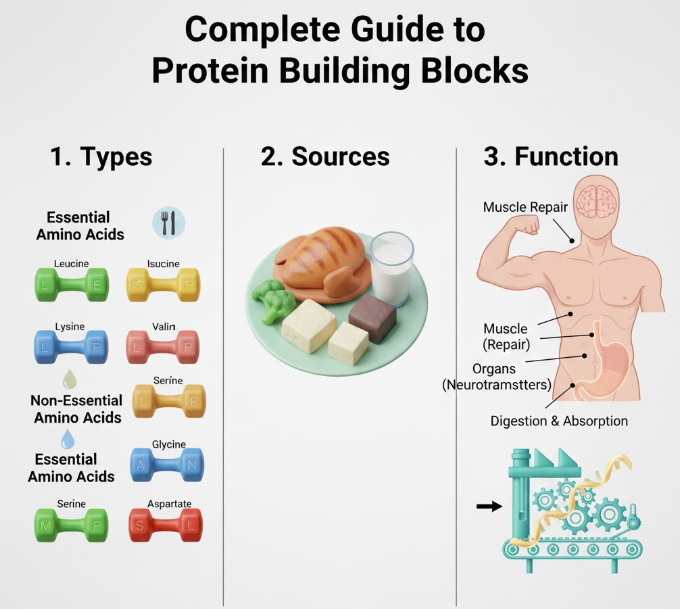
Protein building blocks and muscles
Amino acids:
-
Repair muscle after exercise
-
Prevent muscle loss
-
Help muscles grow stronger
This is why protein is important not only for athletes, but also for:
-
Students
-
Office workers
-
Elderly people
Protein building blocks and the brain
Some amino acids help make:
-
Serotonin (mood & sleep) 😴
-
Dopamine (focus & motivation)
-
Other brain messengers
Low protein intake can affect:
-
Mood
-
Focus
-
Energy levels
What happens if protein building blocks are missing?
-
Weak muscles
-
Slow healing
-
Low immunity
-
Hair fall
-
Low energy
-
Poor growth
This usually happens with poor diet or long-term low protein intake.
Best foods for protein building blocks
| Food | Protein Quality |
|---|---|
| Eggs | Excellent |
| Chicken & meat | High |
| Fish | High |
| Milk & yogurt | High |
| Lentils & beans | Good |
| Soy products | Very good |
| Nuts & seeds | Good |
Eating a variety of foods gives all amino acids.
Plant vs animal protein
-
Animal protein contains all essential amino acids
-
Plant protein can also be complete if foods are combined
Example:
-
Rice + lentils
-
Bread + peanut butter
Vegetarians can get all protein building blocks easily 🌱
Do you need protein supplements?
Most people do not need supplements.
You may need them only if:
-
Doctor recommends
-
Medical condition exists
-
Very high physical training
Food is always the best source.
FAQs
Are protein building blocks only for bodybuilders?
No. Everyone needs them daily.
Can the body store amino acids?
No. That’s why regular protein intake is important.
Is too much protein bad?
Very high intake over long periods may stress kidneys in some people.
Do children need protein building blocks?
Yes. They are essential for growth and development.
Final thoughts
Protein building blocks may be small, but they do big work inside your body.
They build, repair, protect, and power you every single day 💙
By eating a balanced diet with enough protein, you naturally provide your body with all the building blocks it needs to stay healthy, strong, and active.