Amino acids may sound technical, but their job in your body is actually very simple. They help build, repair, and run almost everything inside you. From muscles to the brain, from skin to immunity — amino acids are always at work 🧠💪
Think of them as tiny workers that never stop.
What happens to amino acids after you eat food?
When you eat protein-rich foods like eggs, meat, milk, beans, or lentils, your body does this:
-
Digestion breaks protein into amino acids
-
Amino acids enter the bloodstream
-
They travel to different parts of the body
-
Each amino acid performs its specific job
So protein itself is not used directly — amino acids do the real work.
Building and repairing muscles
One of the most important roles of amino acids is muscle repair and growth.
-
They repair tiny muscle tears after activity
-
Help muscles grow stronger
-
Prevent muscle breakdown
This is why protein and amino acids are important not just for athletes, but for everyone, including older adults.
Making proteins the body needs
Your body uses amino acids to make thousands of proteins, such as:
-
Enzymes (help digestion and chemical reactions)
-
Hormones (control body processes)
-
Antibodies (fight infections)
Without amino acids, your body cannot make these vital proteins.
Supporting brain and mood
Some amino acids help your brain work properly:
-
They help make neurotransmitters (brain messengers)
-
Support focus, memory, and mood
-
Help with sleep and relaxation
For example, tryptophan helps make serotonin, which affects mood and sleep 😴
Helping the immune system
Amino acids:
-
Help produce immune cells
-
Support healing after illness or injury
-
Strengthen the body’s defense system
When you’re sick or stressed, your body may need more amino acids to recover.
Providing energy when needed
If your body runs low on carbohydrates or fats:
-
Amino acids can be used as an energy source
-
This helps keep the body functioning during fasting or illness
They are not the first choice for energy, but they are a backup fuel 🔋
Maintaining skin, hair, and nails
Amino acids help form:
-
Collagen (skin strength and elasticity)
-
Keratin (hair and nails)
Without enough amino acids:
-
Hair may become weak
-
Skin may lose glow
-
Nails may break easily
How different amino acids do different jobs
| Function | Amino Acids Help With |
|---|---|
| Muscles | Growth and repair |
| Brain | Mood, memory, sleep |
| Immunity | Fighting illness |
| Digestion | Enzyme production |
| Skin & hair | Strength and repair |
| Energy | Backup fuel |
Each amino acid has a specific role, but they work together as a team.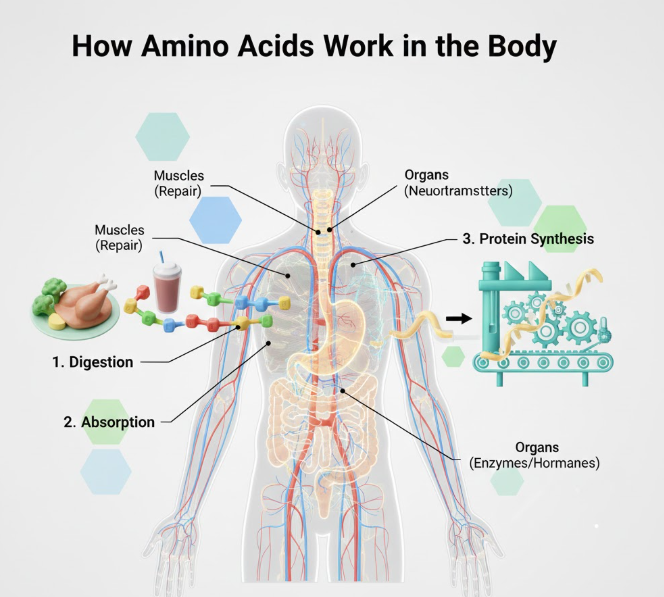
What happens if the body lacks amino acids?
-
Weak muscles
-
Low energy
-
Poor immunity
-
Slow healing
-
Hair and skin problems
This usually happens when protein intake is too low.
Best food sources for amino acids
| Food | Amino Acid Quality |
|---|---|
| Eggs | Excellent |
| Meat & chicken | High |
| Fish | High |
| Milk & yogurt | High |
| Beans & lentils | Good |
| Soy products | Very good |
| Nuts & seeds | Good |
A balanced diet ensures your body gets all the amino acids it needs.
FAQs
Do amino acids work immediately after eating?
They begin working after digestion, usually within a few hours.
Are amino acids only important for muscles?
No. They support the brain, immunity, skin, hormones, and energy.
Can the body store amino acids?
Not for long. That’s why regular protein intake is important.
Do vegetarians get enough amino acids?
Yes, if they eat a variety of plant-based foods.
Final thoughts
Amino acids are small, but their impact is huge.
They work quietly inside your body every day — building, repairing, protecting, and powering you 💙
By eating enough protein from a balanced diet, you give your body the amino acids it needs to stay strong, healthy, and active.