Introduction
Have you ever questioned yourself why people tell you that you are sleepy after eating turkey? The solution to this is through a special substance known as tryptophan. This small protein molecule contributes immensely to the fact that your body is ready to sleep.
Millions of individuals have difficulties in getting sleep at night. They fret and worry, count sheep, or spend hours staring at the ceiling. Not all people know that the food that they consume in the daytime may be the solution to their sleeping problems. Tryptophan is one of those covert assistants that you cannot manufacture but you need.
In this paper, you will get to know how the tryptophan actually functions in your body to induce sleep. We are going to look at the type and the amount of foods that have it, and find out whether or not supplements are useful. Towards the end, you would have a practical knowledge to advance your sleep without artificial harm.
What Exactly Is Tryptophan?
Tryptophan is a necessary amino acid. Imagine that amino acids are your little molecules which are used by your body to create proteins. These building blocks are required by your skin, organs and muscles, which are needed to work properly.
The essential is a word that implies that your body cannot produce tryptophan alone. You have to take it out of what you eat. After taking tryptophan, your body converts it into other related important substances influencing your mood and sleep.
The Process of Tryptophan Use in the Body
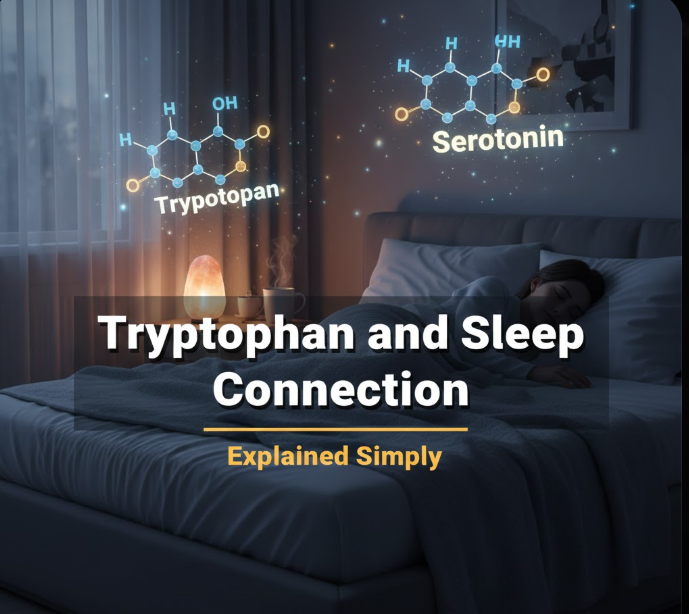
Once tryptophan enters your body, it changes in a number of ways. First, it enters your bloodstream into your brain. When there, it is changed into a chemical known as 5-HTP (5-hydroxytryptophan).
Then, the 5-HTP is produced into serotonin in your body. You will find that serotonin is sometimes referred to as the feel-good chemical as it aids in the control of your mood. Yet it is far more than that.
And the last one is when it gets dark and time to sleep comes, your body changes serotonin to melatonin. The natural sleep hormone in your body is melatonin. It informs your brain that time to relax and rest.
The Science of Tryptophan and Sleep
The linkage between tryptophan and sleep is not merely a fallacy. This relationship has been researched by scientists over the decades and has found some intriguing information about the mechanism.
The Serotonin-Melatonin Pathway
This is one of the factory assembly lines in your brain. The raw material entering at one end is Tryptophan. It is gradually converted into the final product: melatonin by a series of chemical reactions.
Serotonin is the intermediate. When you are awake, your body has increased serotonin levels to make you keep an alert state and to keep you in equilibrium. When the sun goes down, there is a special gland in your brain which is referred to as pineal gland, which starts converting serotonin into melatonin.
The curves show an increase in the evening and peak around midnight and decline slowly towards the morning. This natural cycle assists in controlling your sleep wake-pattern also referred to as your circadian rhythm.
Why Timing Matters
You may believe that having foods with high amounts of tryptophan just before you go to bed would put you to sleep instantly. It’s a shame, though, that it is not that easy.
Competition arises when trying to get into your brain. Tryptophan. Proteins provide other amino acids that also cross that very door into your brain using the same pathway. Tryptophan is frequently displaced by these competing amino acids.
This is the reason why, having a big steak immediately before going to sleep, will not always make you feel drowsy. The rest of the amino acids present in the meat will compete with tryptophan, and it will be ineffective.
Foods Rich in Tryptophan
The most appropriate part of natural food is the source of tryptophan. This is a sleep-promoting amino acid that can be found in various and many delicious and nutritive foods.
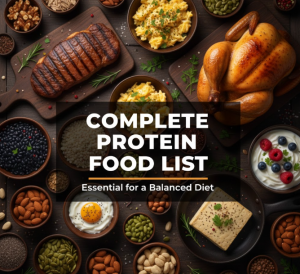
Protein-Based Foods
Most of the time, Turkey receives all the hype yet most other foods have more tryptophan per serving.
Chicken and Turkey: Both are powerful sources. An average portion of chicken breast has an average of 350-400 mg of tryptophan.
Fish: Salmon, tuna and halibut are excellent sources. Tuna tops the list at approximately 400mg/serving.
Eggs: The average egg has approximately 75mg of tryptophan. They are also very versatile and simple to cook.
Dairy Products: Tryptophan is found in milk, cheese and yogurt. Approximately 100 mg of tryptophan is contained in a cup of milk, and that is the reason why warm milk at bedtime is a common sleep aid.
Plant-Based Sources
Tryptophan does not require the consumption of animal products to fulfill the required amount. There are a number of plant foods that are very rich.
Nuts and Seeds: Pumpkin seeds are the winners in this category with an average of 560 mg in a cup. Sunflower seeds, cashews and almonds are also good sources.
Soy Products: Tofu, tempeh and edamame are good sources. Approximately 280mg is present in one cup of cooked soybeans.
Legumes: Chickpeas, lentils, and black beans are all sources of tryptophan on a daily basis.
Whole Grains: Oats, quinoa and brown rice have lower yet significant quantities of tryptophan.
Comparison Table: Tryptophan Content
| Food | Serving Size | Tryptophan Content (mg) |
|---|---|---|
| Pumpkin Seeds | 1 cup | 560 |
| Chicken Breast | 3 oz | 350 |
| Tuna | 3 oz | 400 |
| Turkey | 3 oz | 350 |
| Tofu | 1 cup | 280 |
| Eggs | 1 large | 75 |
| Milk | 1 cup | 100 |
| Oats | 1 cup cooked | 150 |
| Salmon | 3 oz | 300 |
| Cheese (Cheddar) | 1 oz | 90 |
Eat Yourself to Better Sleep
It is not just sufficient to consume foods that contain tryptophan. You must have them in a strategic manner so that you can have the maximum benefit through them as promoters of sleep.
The Carbohydrate Connection
This is strange, but here is a fantastic fact; when you eat the sources of tryptophan at the same time with carbohydrates, you may simply increase the amount of tryptophan reaching your brain.
Consumption of carbohydrates will cause your body to generate insulin. Insulin assists in eliminating the majority of amino acids in your blood system and storing them in your muscles. But insulin does not have the same effect on tryptophan.
Less competition in the blood means that tryptophan has a better path to your brain. This is the reason why sleeping better can be achieved by combining protein foods with healthy carbohydrates.
Smart Food Combinations
Combine the following about 2-3 hours before going to sleep:
Turkey sandwich on whole wheat bread: The bread contains carbohydrates, whereas the turkey is the source of tryptophan that is used to get it to your brain.
Greek yogurt, honey, and almonds: Dairy is a source of tryptophan, simple carbs are found in honey, and almonds are an additional source of tryptophan and healthy fats.
Oatmeal with banana slices: Oats and bananas have tryptophan, and bananas also have carbs and magnesium which enhance sleep.
Hummus and whole grain crackers: Chickpeas in hummus contain tryptophan and the carbohydrates which are found in crackers help in facilitating the absorption.
What is the Recommended Intake of Tryptophan?
The level of tryptophan required varies with your body weight and general health. The amount recommended to be taken by the majority of adults is not very large.
Daily Requirements
Studies indicate that adults should consume approximately 3.5-6mg of tryptophan per kilogram of body mass on a daily basis. In the case of an individual with a weight of 150 pounds (68 kg), it translates to about 240-400 mg per day.
The majority of the population can meet this demand with the help of a regular, balanced diet without any difficulties. One serving of fish or one chicken breast is usually sufficient to meet the daily need of tryptophan.
Can You Get Too Much?
Although one cannot get too much tryptophan in food, supplements are a different issue. The consumption of very large doses of tryptophan supplements might result in side effects.
Excess tryptophan may have symptoms such as nausea, headache, dizziness, and daytime drowsiness. In severe instances, it may cause a severe condition known as serotonin syndrome.
Using supplements? The recommended dosages must always be followed, and a healthcare provider must always be consulted.
Tryptophan Supplements: Effective or Not?
When individuals have sleeping problems, many resort to supplements. Tryptophan occurs as a supplement, and another very similar molecule, 5-HTP.
There are Several Types of Supplements that are Available
L-Tryptophan: This is the one that is in food. The dosage of supplements is usually 500-1000 mg per capsule.
5-HTP: This is a step closer to serotonin in the synthesis. There are individuals who consider it to be faster than normal tryptophan.
What Research Shows
Research on tryptophan supplements depicts contradictory findings. According to some studies, 1-2 grams of doses taken at bedtime can help an individual fall asleep quicker and better.
Other researchers indicate that there are limited effects, particularly among individuals who receive sufficient quantities of tryptophan in their foods. The supplements appear to be the most useful in individuals having the actual tryptophan deficiency or particular sleeping disorders.
Important Safety Notes
Unsafe tryptophan supplements later in the 1980s caused severe health effects that resulted in temporary bans in certain countries. The contemporary supplements are believed to be safer, though the quality differs among brands.
It is always essential to use supplements of good quality with manufacturers that are reputable and are tested by a third party. Seek certification of organizations such as USP, NSF or ConsumerLab.
There are Other Factors Which Influence the Effectiveness of Tryptophan
Although you may be consuming a lot of tryptophan in your meals, there are other factors that can affect its effectiveness to make you sleep better.
Stress and Cortisol
When you are stressed, your body secretes more cortisol also known as the stress hormone. When cortisol levels are very high, there is interference with the conversion of tryptophan to serotonin and melatonin.
Tryptophan may work more efficiently in your organism with the help of stress management techniques, exercising, or meditation.
Vitamin and Mineral Cofactors
To change the tryptophan into serotonin and melatonin, your body requires some vitamins and minerals. These include:
Vitamin B6: Necessary in the conversion of tryptophan into serotonin. It is found in fish, poultry and bananas.
Magnesium: Assists in the regulation of neurotransmitters that aid in sleep. Found in nuts, seeds and green vegetables.
Iron: Necessary in different stages of the conversion. It can be found in red meat, beans and fortified cereals.
When any of these vitamins is deficient it may slow down the effectiveness of tryptophan even when the actual amino acid is being consumed adequately.
Light Exposure
Note that melatonin is produced in darkness from serotonin. This conversion can be inhibited by exposure to bright light (particularly blue screen light).
To get the magic of tryptophan to take place, make evenings dark. Dim the lights a couple of hours before you sleep and turn off the screens as much as you can.
Developing Your Own Sleep-Promoting Plan
Now that you have realized how tryptophan functions, you can come up with a workable plan to utilize the sleep enhancing power of tryptophan.
Step 1: Evaluate Your Current Diet
Keep a log of what you are eating for a few days. Do you eat enough foods with tryptophan? Are you eating them at the right times?
The majority of individuals discover that they already have a sufficient amount of tryptophan but may have to change when they consume it or modify their meals.
Step 2: Plan Strategic Meals
Make your dinner include protein and complex carbohydrates. This combination sets you up for successful absorption of tryptophan in the evening.
It is possible to include a light snack 2-3 hours before sleep that brings together foods rich in tryptophan and carbohydrates.
Step 3: Optimize Your Environment
Provide a cozy mood to help your body to promote the production of melatonin. Maintain your room as cool, dark and quiet.
Create some regular bedtime routine that reminds your body that it is bedtime.
Step 4: Support General Nutrition
Be sure that you are getting adequate B vitamins, magnesium, and iron that help with the conversion of tryptophan. These nutrients are normally found in a diverse diet which is full of whole food.
A good quality multivitamin could be considered in case you have a dietary limitation that prevents you from taking all the nutrients.
Myths About Tryptophan and Sleep
There are also several myths concerning tryptophan and its influence on sleep. We can clear up the most widespread ones.
Myth 1: Turkey Makes You Sleepy After Thanksgiving Dinner
Although turkey does have tryptophan, it is not the main cause that makes people feel sleepy after the Thanksgiving dinner. The actual culprits are excessive eating and huge quantities of carbohydrates in stuffing, potatoes, and pie.
In reality, Turkey does not have much tryptophan when compared to most other foods. The lethargy is due to the excessive consumption of food in general that diverts the blood flow towards the digestive system.
Myth 2: The More Tryptophan the Better Sleep
Massive dosing of tryptophan will not always help you in getting a good sleep. The truth is that very high dosages are associated with side effects but not more benefits.
The amount of tryptophan that your body can use and digest at a time is limited. The surplus is merely broken down or excreted.
Myth 3: Tryptophan Acts Instantly
Tryptophan has to take time to change to serotonin and later to melatonin. It can take a number of hours, which is the reason why the consumption of tryptophan-containing food just before bed is not very effective.
To maximize the effect, these foods should be taken in the earlier part of the evening to give time to the conversion process to take place.
Special Considerations for Various Groups
Some groups of people might have to be careful of their consumption of tryptophan.
The Athletic and Physical Population
Exercising individuals might require more protein generally, and in this case, their tryptophan intake also rises. Nonetheless, vigorous exercise near the time of sleep may disrupt sleep, irrespective of the levels of tryptophan.
Plan your workouts to complete at least 3-4 hours before going to bed to enable the normalization of your body temperature and stress hormones.
Vegetarians and Vegans
Nuts, seeds, soy products, and legumes are rich in tryptophan, which is obtained by plant-eaters. They should however be more conscious of the combination of these foods and carbohydrates to maximize its absorption.
A large number of plant proteins are naturally coupled with carbohydrates, and this can actually be a benefit to sleep.
Older Adults
With age our bodies might have slowed down the conversion of tryptophan to serotonin and melatonin. The elderly population may have to pay more attention to the amount of tryptophan they consume and their sleep hygiene.
It has been indicated that elderly people might require a bit more tryptophan in order to experience the same effects of the substance in promoting sleep.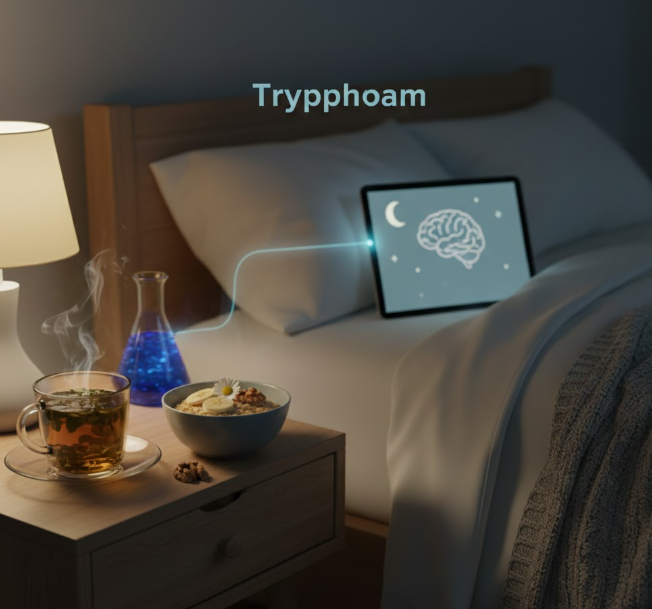
Frequently Asked Questions
Q: What is the time needed to sleep with the help of tryptophan?
A: Tryptophan requires 2-3 hours to be changed into serotonin and later melatonin. To maximize its efficiency, one should consume tryptophan-containing foods during the early evening and not immediately before sleeping.
Q: Can I take tryptophan supplements each night?
A: Although it is most likely safe to use in the short term, long-term daily supplementation is to be discussed with a medical professional. Food sources are generally safe to use on a regular and continuous basis.
Q: Will tryptophan assist in insomnia?
A: Tryptophan can be used in the case of mild sleep disturbance, although chronic insomnia usually requires more thorough treatment. In case you constantly have a problem falling asleep, you should see a doctor as opposed to relying on tryptophan alone.
Q: Should I not eat protein before sleep?
A: Not at all. Moderate quantities of protein mixed with carbs can promote sleep. Simply do not eat very big and heavy meals near bedtime because they may lead to discomfort.
Q: Does tryptophan interact with any medication?
A: Yes. Tryptophan may also react with antidepressants, particularly SSRIs and MAOIs, and lead to the development of serotonin syndrome. Never take tryptophan supplements without consulting your doctor in case you are taking some drugs.
Q: Could children use tryptophan supplements?
A: Tryptophan supplements should not be used by children without a doctor’s approval. They are able to obtain tryptophan from food in a balanced diet safely.
Q: Does cooking destroy tryptophan in food?
A: There are no substantial changes in the tryptophan in foods made by normal methods of cooking. Nonetheless, excessive heat may bring about some disintegration in the long run.
Conclusion
There is a real correlation between tryptophan and sleep but it is not as easy as eating turkey and going to sleep. Tryptophan is a component of a complex system of your body, which transforms it to serotonin and then melatonin.
Consuming sufficient amounts of tryptophan in your diet is not hard provided that you consume many protein-rich foods. The trick is to eat these foods with healthy carbohydrates and at the appropriate times. Goal: Take in meals rich in tryptophan at the beginning of the evening, leaving several hours for the conversion process before sleep.
Do not forget that tryptophan is not the only part of the sleep puzzle. Sleep hygiene, stress control, exercise and consistent sleep schedules are all interconnected in ensuring that people enjoy a good rest.
The majority of the population do not have to take supplements when they have a balanced diet. But, in case you’re considering tryptophan supplements, it is better to consult a healthcare provider before taking them to be sure that they are safe and suitable in your case.
With the knowledge of the action of tryptophan, you would be able to aid the natural sleep mechanisms in your body with intelligent dietary habits. Even little variations in the food you consume and the timing of doing so can have a significant impact on your quality of sleep at night.
Smart nutrition is the beginning of sweet dreams. Provide your body with the tryptophan it requires, and combine it with a good sleeping pattern, and enjoy the rewards of really good sleep.